Showing posts with label organic. Show all posts

Tuesday, July 16, 2013

Zeekeeper Honeyworks + Awesome Logo + Updates!


   Check it out! How freaking cool is that?! This is the first version of my company logo, designed and illustrated by my good friend Angela An. She does some really incredible things, and has a really sweet illustration style like Samurai Jack! I've been incredibly touched by her offering her time and artwork to help me get Zeekeeper Honeyworks off the ground and looking sweet! We've talked about doing some really cool things with honey labels, one example being a season-based illustration for the label, depending upon which season the honey has been collected or bottled in. Just that idea right there has so many ways of being turned into something awesome, and I'm extremely excited about it!

   Angela's blog is super cool (with a great Game of Thrones illustration among other things!) and you should go check it out before continuing with this blog entry!  She does commissions on top of prints of her work, so you should probly think about those too ;) Oh, and it also has the newest version of the logo, which I'm planning on sharing in the next blog post, but feel free to cheat and check it out!

  I also didn't think Z's Bees was an apt enough description for what I want to accomplish in beekeeping, both commercially and educationally. On top of that, there's a Z's Bees out of California so it'd be too confusing. If anyone is familiar with Sam Comfort of Anarchy Apiaries, reading about his philosophy was the catalyst that sparked my interest in the craft. I could write an entire post about my thoughts on commercial methods of beekeeping and farming, so that will be another entry. However, I'll sum it up by saying that the modern generation has a stunning disconnect with where our food comes from, where our species comes from (spoiler alert: it's the forest and wilderness), and the mental/spiritual stress we put on ourselves by maintaining that disconnect. I'd like to create a non-profit division of my beekeeping for holding child-based educational workshops, with the goal of keeping that incredible curiosity burning. In addition, having fun with honey (mead, natural health products like lip balm, recipes) is a big part of my interests as well. No young person of the new generation has ANY idea what an apiary is either, much less an aviary. So the nickname given to me, by my friend Mark, plus "honeyworks" was settled upon. Zeekeeper Honeyworks! I also got the Facebook page off the ground as well, feel free to join up for pics and other things that are shared more often than here on the blog :)

Zeekeeper Honeyworks @ Facebook

Hive Updates

  Wow, it's been wayyy too long since I updated this. Sorry guys! Things got incredibly busy between finals last month, an increase in work hours, and then had to fit beekeeping tasks in with the time between (including a massive cutout, building $3 hive stands, and a $15 solar wax melter!). So there really wasn't time for blogging in between, just uploading and editing all the photos that I'd taken to keep picture records.

   So I'm going to have to split these updates into four different posts. 
1) Individual hive updates
2) Cut out of a 1 3/4 year old feral hive, which was living under the floorboards of a tool shed
3) DIY: Building cheap, easy, durable hive stands for under $5
4) DIY: Building a solar wax melter for under $20 (and best of all, almost no assembly required)
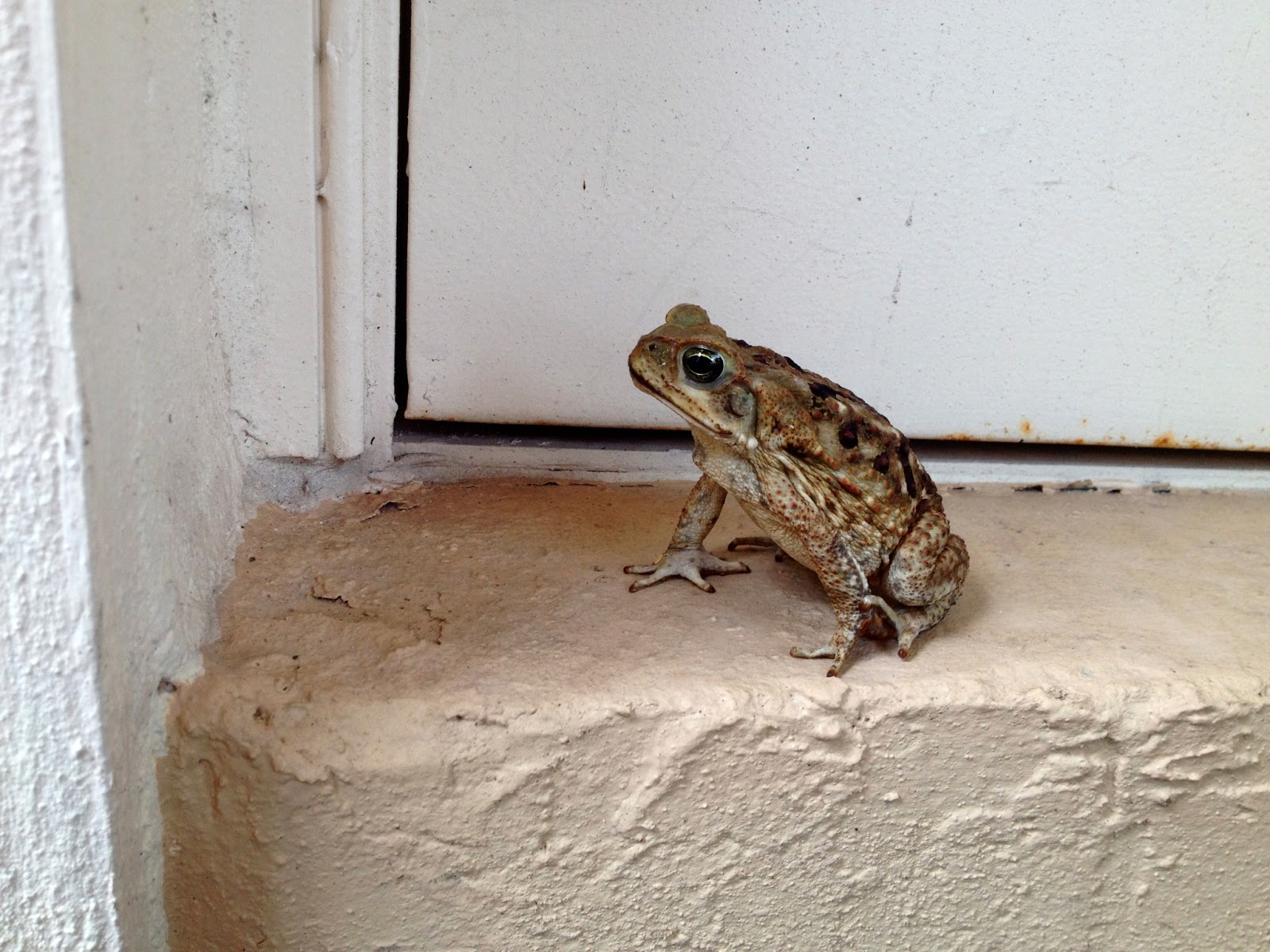

   You may also be wondering why I have a toad as the first picture. I'd noticed that there weren't any dead bees around the hive and figured the ants had been taking them away. Then I noticed a toad when I went to do some evening hive checks, the week after that there were two toads, then three toads. Soon enough, all three toads stayed nearby day and night. It's the time of year where toads are reproducing so it's wasn't much of a surprise, but the lack of bees was still a mystery. 

   Then one day it clicked after seeing a dead bee get gobbled up by a toad. These three had made my backyard their home! They were hoovering up any and all bees that they could! All of this really has nothing to do with beekeeping. They were like my clean up crew, minus the massive poo logs they left everywhere. I just thought it was funny. They ended up disappearing after moving the Dothraki and Casterly Rock out to the bee yard. Sorry toads!


   As for the hives, everyone is doing quite well! Winterfell and Casterly Rock are both solidly building up their second Deeps. I was going to do a check on Winterfell today but got delayed due to rain, and by the time I got out to them they were mostly home, which means testy guard bees. So they'll get checked tomorrow. The above picture is from a check of Winterfell from two weeks ago. For anyone who hasn't seen it before, that's what drone comb looks like when normal brood comb (on foundation) is expanded to fit drones. Drones are much larger than the worker bees, so the width and depth of the individual cells needs to be expanded. A drone cell in the works can be seen just to the top right of the photo's center point.

A larger view of the drone frame. Solid white capped band of honey along the top, with eggs and younger larvae in the middle, older larvae and capped cells at the bottom.

   Casterly Rock thoroughly built up all 4 frames and will be getting their last 6 frames in the morning. 

   The Dothraki have also moved into a full size hive! They're doing very well ever since their new queen began laying. Something interesting was noted since they were also given two frames of comb from a cut out that I did. More on that with the next post though!

    I was also only able to do a quick observation on the Wildling hive due today's weather delay. No real update until tomorrow. They are happily going about their business though!

Fun Fact: Galleria mellonella may have the highest hearing sensitivity of all animals. They can hear ultrasonic frequences up to 300khz.
   If you haven't seen a wax moth before, this is what a wax moth looks like. Specifically, the Greater Wax Moth (Galleria mellonella). It belongs to the snout moth family, so it looks like they have little stubby "snouts" on them similar to a dog's snout shape. These things are bad news! If they gain access to a hive that hasn't built up to fill their living space then these moths can cause some serious havoc. Their larvae will hatch, eat comb, and leave a messy, silky mess everywhere. No bueno! This one tried to Solid Snake itself in when I was checking the Widlings. Thankfully I noticed a dark shape on the underside of the new frames, which wasn't there before, when putting the inner cover back on the Wildlings. Shame that they're so nice to look at... it got squished.

I'm going to keep this entry short, since it's just a summary, and there's a good deal to write about the cut-out and how-to's of the honey extracting! Expect the cut out entry to post tomorrow morning. I'm going to write it tonight, but I'm dedicating some time every night to learning HTML5 and CSS for building Zeekeeper.com. So it'll probly be a little too late for most people to read. Blog posts made good morning reading over coffee anyhow. Lots of HD pics will be included as well :)

Monday, June 3, 2013

Hive Inspections: Queens, Queens Everywhere (And Rain)


   It's been raining... a lot. For anyone not in Florida, I don't think you can truly grasp our levels of rainfall. We may as well have had a tropical storm sitting over this part of the State for the last week. Normally that's not a big deal. It's nice to stay in and read a book to the relaxing sound of the rain. However, it wasn't so fun now that I'm keeping bees. The girls were rearing and ready to go each morning, stretching their wings while clustering at the hive entrance and zooming out over the lake.

   However, almost like clockwork, at 10am it would start drizzling. The foraging bees would all start returning, and soon enough there was heavy rain coming down. During the worst of the flash-rains there would be bees flying through rain so thick, and consisting of such giant raindrops, that there wasn't even 100ft of visibility. Occasionally some would get shot down only a few feet from the hive, and one day I scooped at least 30 bees off of the ground and surrounding puddles. I'm sure they could get out on their own, eventually, but I was there to help them so I figured "why not?". Their delicate wings would get stuck to the ground by the surface tension of the water, so I picked them up instead of letting the toads have a buffet.


   Eventually, the rain would slack off or stop for short periods of time throughout the day. However, I'm sure the bees can sense the change in barometric pressure and know that the rain isn't finished yet. So at every opportunity they would just swarm the feeder jar on top of the hive. Both patio hives went through full jars of syrup in 48 hours, and, one particularly rainy day, the larger of the two patio hives chugged 3/4 of a jar in one day!


  This was a pretty normal sight for every afternoon, bees all over the jar lid and others walking around below picking up any spillage. On the day that they chugged 3/4 of a jar, this entire area between the wood bars was practically swarmed by the bees. If they couldn't forage, then by golly they were going to do their best to empty that jar!

Casterly Rock


   Speaking of the patio hives, I've decided upon a name for the most recent feral hive, Casterly Rock. These are the girls that I had cut out from the giant tree pot, and this is their queen! She's a beautiful, dark scarlet and practically blood red. What a badass. If it wasn't for pulling frames of brood for the Dothraki to make a queen from, they'd be my #1 hive in terms of frames filled out + number of bees. They're definitely still #1 in population, but a bit behind Winterfell due to the frame borrowing. I have no doubt that they'll surpass Winterfell as soon as the constant rain slacks off. It probably helps that whenever they're out of syrup, I'll go and make them a fresh jar. Winterfell on the other hand is not being fed very often, and I've actually stopped feeding them, for the moment, in order to pull a frame of honey in the near future.


   If you're wondering why I'm so confident with Casterly Rock, just take a look at this frame. This is a thing of beauty right here! That whole top row of white is finished honey, the row of orange underneath is pollen/bee bread (a fermented mixture of nectar + pollen + bee enzymes) that is used to feed the young, the entire rest of the frame progresses from eggs in the empty looking cells, to young larvae, to mature larvae, back to young larvae, and then finally more eggs. I can't wait to see this frame all capped up. It's going to be an almost solid sheet of capped honey, filled cells of bee bread, and capped brood.
 
Notes: 
Pests: none, Brood: 5 frames (Eggs/Larvae/CappedBrood/Drone, another frame given to Dothraki) with solid laying pattern, Honey: 2 frames (Honey only), Syrup: 3 mason jars in one week

Dothraki


   FINALLY, the Dothraki have a Khaleesi (queen)! I knew that virgin queen from the other week had been stung to death! Doubts were starting to creep in that maybe she hadn't been stung, that maybe she was their victorious queen, but had been injured/gotten sick while on a maiden flight. Nope, that virgin queen had indeed been on the losing side of the May 2013 Khaleesi Thunderdome.

   Sorry for the poor picture quality by the way. I'll get a better picture in two weeks. I'm going to leave them as undisturbed as possible, that way the new queen will feel secure and be confident going full steam with egg laying. I didn't see any eggs today. However, queens start out laying slowly, and ramp up their rates of egg laying as they mature. I also didn't inspect her frame (the last frame actually) all that thoroughly, because I didn't want to spook her into flying off.

   Lots of honey built up by these girls, lots of pollen stored away, and lots of drawn out comb (mostly thanks to pulling from Casterly Rock). Funny thing is that two days ago I had pulled a full frame of brood + eggs from Casterly rock to give to the Dothraki. I had inspected this hive for a queen and hadn't found one. So apparently she must have been out on her maiden flight or I simply hadn't found her. No clue. I was extremely surprised to see her today!

   The Dothraki are set to start exploding in productivity. I did see three hives beetles in there however... I attribute that to having low numbers until only recently. Two of them were crushed, and the third one escaped behind a frame before I could put down the frame that I was inspecting. I'll get that little bastard next time.

Notes: 
Pests: Three hive beetles (two dead, one escaped deeper into the hive), Brood: 4 "Super" frames (Larvae/CappedBrood), Honey: 1 frames (Honey and Pollen), Syrup: 2 mason jars in one week

Ren


She thinks hive inspection day is great. It means at least an hour of hunting lizards and running around. Time for another nail trim too!

Wildlings


   These girls are doing really well. They've been stockpiling honey and pollen for entire time that their queen was maturing. Pictured above is a "free form" Super frame of 90% capped honey. It's tempting to steal a small piece to try it, but it's not worth setting them back at all. Not to mention that they've been fed syrup pretty regularly, so chances are it wouldn't taste very strong in comparison to legit honey.

   Speaking of feeding... I'm going to have to build a real hive stand for the bee yard. I noticed that they were draining their feeder rather quickly. Upon closer inspection there were some ants walking around near the entrance. After pulling the feeder jar out I could see a good twenty or so fire ants on and around the feeder. Argh I hate ants! They weren't invading the hive since there were cracks in the plastic feeder that they could fit through, so no problem there, but that's food for MY bees, not you ants!

   So how to fix that? It's pretty simple. I'm going to have to go pick up some 2x4s to assemble into a long frame with six legs (two on each end, two in the center), and sit each leg in a can of water & motor oil. That way the ants won't be able to cross the liquid and climb onto the legs of the stand. It's just going to take some elbow grease to make it happen.


   The Wildlings have also been drinking again (typical Wildlings), and have gone to work drunk. Look at this crazy comb that they've built. Pretty awesome to look at, not so awesome in terms of functionality and organization. I had to scrape it off with my hive tool and set the pieces at the hive entrance for them to clean out the collected nectar. Other than that though, great looking hive! I set them up with a Deep as their second stage, the first stage is a Super. Once they start filling out the top then I can change around the order, with the Deep on bottom and the Super on top. THEN I can move the queen into the Deep, with the queen excluder on top of it. That way the brood comb can hatch out completely, and the queen can continue laying down below. Once the brood comb in the Super is completely hatched out I can remove it completely, and put a second Deep on so that it goes Stage 1: Deep, Stage 2: Deep, and they'll have their full strength hive body. Everything else on top will purely be for clean honey production. 

Notes: 
Pests: One hive beetles (crushed), Brood: 5 frames (Eggs/Larvae/CappedBrood) with solid laying pattern, Honey: 2 frames (Honey only), Syrup: 1 mason jars in one week

Winterfell


   Winterfell has drones! How cool is that?! The one in the center of the picture with the fat abdomen, larger wings, and eyes similar to house fly is a drone. Just think of those massive eyes as the goggles of a fighter pilot. Their whole physiology is based around mid-air acrobatics in order to be the first to link up with a virgin queen. Even if afterwards their whole "situation" gets ripped out of their bodies. Afterwards they'll die... still a better love story than Twilight.

   Their feeder was removed from inside the second Deep and replaced with the last three frames. Other than that, I didn't bother them too much. They had spread well throughout the second Deep and had a good amount of surface area covered when I took the inner cover off. It seems the feeder encouraged them to start moving through the queen excluder too, since there was a bit of wax buildup on a few second stage frames. They still have three frames in the first stage to fill out, so I'm not too concerned about it. The main purpose of the second stage being put on this soon is to inhibit swarming. 

   Swarming is when the original queen takes off with half the hive to start a new hive, while the remaining bees raise a new queen to continue the original hive. Swarming will occur when they run out of space to expand, and feel "cluttered". So to avoid that it's best to add another Deep or Super on top when they've reached 7 frames. That gives the beekeeper plenty of leeway instead of waiting an extra two or three weeks, and then it's suddenly critical that the next stage is added immediately.


   I didn't do a thorough inspection of them, since that would require taking off the lightly populated second stage, taking off the queen excluder, and then going through the first stage. There is already one dead hive directly across from this one, on the next pallet over. That one has pretty much just been a beetle farm from the looks of it. If the covers are kept off for more than ten minutes then I'll start getting beetles flying over to land on the lip of the hives, it's disgusting. I'll be moving all of my hives to a different area of the property once the stands are finished. 

   Winterfell is strong enough now that there isn't much to worry about with them, outside of ant infestation and varroa. So they'll be fine to go for another week without invasive inspection. I did, however, see one beetle land at the entrance after placing a piece of nectar/honey-filled stray comb at the entrance for the girls to clean out. The smell must have attracted the beetle. Winterfell proved it's mettle though, with the guard bees blocking off the beetle from the entrance and chasing it up the exterior of the hive. I grabbed it as soon as I could and crushed it. 

Notes from gazing down through the queen excluder:
Pests: One hive beetle (crushed, attempted to enter by the front entrance, was blocked by guard bees and chased up the side of the hive box where it met it's fate), Brood: 6 frames (Eggs/Larvae/CappedBrood/Drone) with assumed solid laying pattern, Honey: 2 frames, possibly 3 by now (Honey only), Syrup: 1 mason jar in three days


   This has truly been an excellent week for the bees. Two new queens in two weeks, second stages added to both Wildlings and Winterfell, Dothraki having massive stores of bee bread for the new babies, and Casterly Rock being ready for a move to the bee yard where they will receive their second stage. I can finally sleep completely soundly without any stressing over queenless hives falling behind.

   Not just that, but a good friend of mine has decided to help me out with a logo for the upcoming wax products (lip balm, etc) and honey. I can't wait to show her design off! Exciting stuff! 

Tuesday, May 28, 2013

Hive Inspections Pt.3: Trailer-Home Cut-Out & Winterfell Is Stacked


   This cut-out was actually done the day before the hive checks, and I wanted to cover it before going into the bee yard bees. Mainly because it involves hive beetles, a pest that's very relevant to my bee yard bees.

   Mike contacted me in the morning to see if I could help him out with a cut out involving a trailer home. He had a job to do in the morning, and would be starting the trailer home around the time that Algebra was finishing up. It was also right down the street from my house, so it was a perfect opportunity for more experience. My face was still swollen pretty hardcore, but everything I've read says that heat is a great treatment. So if anything, sweating it out in a bee jacket under the Florida sun would be healthy. 


   Upon arriving at the trailer, Mike joked about how I'd gotten lucky, and that it was only a small hive. Brendhan (owner of Bee Barf Apiaries, the primary removal contracting company) had mentioned to Mike that it'd probly be a good "learning experience" due to just how massive trailer home jobs usually are. Apparently the last one they'd done had been half the length of the ENTIRE TRAILER HOME. What a jokester haha. 

   The bees were quite nice, even with how rough I had to be in order to cut away the insulation they were behind. Now, normally removal is done with a full suit. That way there's a minimum of seams for the bees to crawl into. I don't have a full suit, just a jacket with attached veil, and when things are in turmoil bees naturally want to crawl into small, dark spaces. That includes jean legs. 


   As a matter of fact, one got up my jean legs and climbed as if she was going up Everest. There was no backwards motion at all, even when I blocked her off by closing off her vertical progress by gripping my leg. She was on a treasure hunt for some valuable jewels and there was no way to get her out without the jean material pressing down on her, which would make her sting me anyways. So, unfortunately, I ended up having to slap her, hoping that she'd only get a light sting in. Nope, that stinger got buried to the hilt in my knee. Granted, my face was already swollen up from the previous days sting, but this one ended up not being too bad. I also got stung through one of the seams in my glove's finger joints. However, Neither of them swelled at all, and, again, the stung hand was very free of stiffness. It was nice!


   Here you can see the length of the stinger, it's the red line pointing downwards. Those little swords are retty impressive huh? It must run lengthwise inside for about half the length of their abdomen. I'll have to look up the layout of their internal abdomen anatomy. Stingers are actually two separate serrated-edged "blades" that are positioned side by side with a channel between them. The venom is pumped down that channel and into the wound. Contrary to old wisdom, recent research has shown that it's prudent to just pull out the stinger immediately. Use your fingers or nail to scrape/pinch it out, it makes no difference whether the poison sac gets compressed. It's going to keep pumping, like a little heart, the entire time you scramble around for a credit card to scrape with. The amount is so minuscule that it's going to empty out in the time spent searching.


   Anyhow, back to the cut-out. Overall they were healthy! The laying pattern was nice, and there was a minimum of hive beetles. However, take a look at that picture. I didn't notice it at first, but do you see all those larvae with dark heads? Those are Small Hive Beetle larvae, disgusting little bastards. Due to the insulation being just inches from the hive, and being a nice loosely packed, moisture-holding medium it was perfect for the beetles. These little buggers would pupate into a ton of hive beetles, and those might be enough to start sliming up honeycomb with more larvae. Once the comb is slimed, the bees want nothing to do with it. They'd eventually either move to a larger compartment underneath the trailer, or evacuate completely. So it was a good thing for these bees that we got called in!

   This is another reason to make sure there are oil-filled trays under each hives screened bottom board. That way the bees can toss the beetles to their oily death, and the beetles can't lay their larvae in the ground directly underneath the hive. Beetles can fit through the grating, so without an oil tray it's just one massive entrance.


   The cutting out of the comb only took about 30mins, after that it was a matter of finding the queen. In such a tight space it was pretty impossible to move around enough to check all the bees. Mike made the call to vacuum them up. His vacuum has been modified so that the inside of the vacuum tube is smooth, minimizing injuries from bumping around, and the vacuum itself has a suction control. That way he can set it to the minimum level of suction needed to suck up the bees, also minimizing the friction. Instead of an open chamber and filter, they're suctioned into the above box. We knew we had the queen when the remaining bees started to cluster around the screening. That meant they smelled the queen's pheromones and were trying to stay with her. 

   After that we packed up and Mike took the bees of to their new home in his bee yard. Couldn't have gone any smoother without having secured the queen in a clip!

Winterfell


   Now we move forward again to Thursday, which has been the most exciting "bee day" yet. Winterfell is finally ready for a second hive body! 

   I arrived at the bee yard, cleared out more brush on the way to the hives, and this is the first image I saw. At first it was a bit concerning, since it was actually the day after they were meant to receive their new hive body. They'd been looking a bit crowded the week prior, but I just hadn't been able to take a long enough break from school and work to properly paint a new Deep box with multiple layers of primer.

   Thankfully though, upon giving them a look, it was just normal bearding. As you can see, they have an entrance reducer (wood bar with different opening sizes cut into it) and they simply didn't have enough entrance real estate to spread out along the entire thing. This is just typical "bearding" behavior, where a portion of the bees hang out on the exterior of the box in order to cool off and help maintain internal hive temperature.
   

   I should have taken a picture prior to putting the queen excluder mat on (gridded grey square) the top of the hive. The whole top surface of the bars was covered in bees! It was awesome! These girls are busy, and definitely need this new hive body! Now, they'll start storing honey above, and gradually transitioning out the honey frames below. This way way the queen will fill out more and more of the bottom box's frames with brood, while the bees move their honey storage to the above box. The excluder will keep, or exclude, the queen from the top box. That way she'll fill out the bottom box and I can pull a couple frames of honey from the top box once it's finished. I can't wait to taste it!

   I didn't check the hive over in depth. I saw a few eggs and lots of healthy comb from just pulling the frames up by only a few inches. The queen is still doing her thing and the colony is very happy. No stress buzzing from these bees. They were also so busy that only two guard bees came by to inspect me.

   All in all, I couldn't be happier with these Italian-Carniolans and would definitely recommend any beginner to purchase their nucs from Steve over at Bee Healthy Honey Farms. He's a great guy, cares about his bees, and these girls are definitely proof of his hard work!

The Wildlings


   There really isn't anything to cover about the Wildlings this week. I'm leaving them alone until Thursday. They had queen cells last week and they should have hatched out by now. I don't want to risk accidental damage to the new queen, and I don't want her to get spooked. Everyone I've spoken to has recommended leaving the hive untouched for at least two weeks as well.

   There was some crazy vine growth leading up to their entrance, so I cleared that and took their empty feeder jar to refill at home. Sugar syrup is being chugged like mad, so they're definitely keeping busy! I'm not all that concerned about them to be honest. They're a good starting size and, if need be, I can pull a frame from Winterfell for them to build new queen cells. 

   Most would just say "Hey Charles, why don't you just buy replacement queens?". That would be the easy thing to do, but my main goal is to breed hardy, hygienic bees. Feral bees are healthy, proven bees that are able to thrive so well that they reproduce. Remember that honey bees reproduce on a hive level. Any wild swarm is, usually, led by a successful queen that has survived varroa mites and other pests without any "help" from humans. Those are the bees we want as beekeepers. On a large commercial scale, honey is a secondary product of successful bees, while pollination is the primary "product". If the Wildlings and Dothraki can be guided to full health that will be two more hives that can each be split twice in the next twelve months, creating a total of eight hives from just those two!


   That sums it up for this week's hive inspections. Pretty busy, huh? All of this with full time summer classes and working part time, as well as making sure my Kai Ken puppy (Ren) gets all of the attention she deserves. It's a lot of work, but very rewarding. Especially beekeeping, it's part therapy, part physical workout, and part meditation. It's very mind-cleansing to work in agriculture. It gets you back in touch with a part of life that a lot of people are missing out on, and that's the connection with our roots as Earth dwelling mammals. The woods and nature are part of us, and many studies are showing that without we get very stressed out. 

   If anyone reading this thinks that they might like beekeeping, then you should definitely give it a try. It's as involved as you want it to be. Set up a self-made "top bar hive", get some bees, and let them do their thing. Check on them every two or three weeks to make sure there aren't pest problems, and let the bees do their bee thing. They'll make you happy, make your garden a lot more productive, and you'll be doing a good thing for wild bees as well.

   See you next post!


Monday, May 27, 2013

Hive Inspections Pt.2: Re-Re-Queening & My Face Is Over 9000


   The last week and a half has been pretty good for all of the bees, except for the Dothraki. They've been having some issues. Well, either that or they're being very secretive about how well they're doing.

   Upon last hive check, I discovered that their queen cells had hatched out. Also spotted was a potential virgin queen. This week though, there was no queen anywhere, and not just that. There were also a set of NEW queen cells, all of which had been sealed. Curiouser and curiouser.

   One thing that did come to mind was how last inspection's virgin queen was just so scrawny. It didn't even click that it was a virgin queen until a few days later. She was so tiny that, at the time, I had thought she was just a weird looking bee who had developed improperly. Just to be safe, I made sure to skip a full inspection on them to not spook her.

This Week: Dothraki


   As usual, Thursday morning I had gone outside with my coffee to watch them start their day. This time though, there was a small commotion at the entrance. Two bees were dragging another bee out. One bee turned back at the lip of the bottom board, and then the remaining bee flew her captive down to the bricks. The captive bee didn't seem to be struggling at all, and the worker proceeded to hop another six feet with her "cargo". That was a bit strange and caught my interest. Normally they'll dump their dead a max of two feet away. This must have been a special prisoner.


   It was a virgin queen. The first thing that highlighted her as a queen was the honey colored abdomen with a dark tip and no black bars. 


   The next indicator was the classic queen thorax. If you look at the picture above, on the left side is the virgin queen, and the right side is a worker bee. Notice how the thorax on the queen is much more pronounced, has a very light covering of hair (most of which can only really be seen from an angle), and has a defined circular shape in the front half. 

   Also take note of how different her primary (outermost) wings are compared to the worker's. The worker's wings are noticeably smaller in width for the last third of the main wing, while the queen's wings are more wasp-like and much more broad at the tips. I'll have to do some research on the wing details, but I would assume the queen's are for fast, agile aerobatics to avoid predators while on maiden flights and swarm migrations.

   As for the health of this virgin queen, I'm thinking she was in poor health and the workers killed her by stinging her. She wasn't convulsing, it was more of a twitching. The tiny joints in her legs were twitching and vibrating as if she couldn't control them, which says "venom" all over it.

  Honey bee venom is called "apitoxin" and is primarily an anticoagulant. According to Wikipedia's entry on apitoxin, two components of it are apamin and phospholipase. Apamin is a mild neurotoxin, and phospholipase is an enzyme that breaks down phospholipids (cell membranes). Both of these would certainly cause degradation of motor functions as characterized by this virgin queen's symptoms.


   I felt bad for her, but the bees know best. From my perspective I have no idea if there is something wrong with this queen, but from a bee's perspective there could be some glaring problem with this queen. She is a very pretty queen though, the picture doesn't do justice. I'm going to start a pin board for queens, and to create a sort of catalog of different queen colorations. Inevitably, there will be queens that produce very irritable bees. These will have to be killed so that the workers can raise a new, nicer queen. So instead of just pinching (squishing) them, it'd be neat to just collect them.

   Anyways, after taking some pictures I went back and inspected the hive. There were seven new queen cells, and a good number of capped brood had hatched out. The hive was very busy with workers packing away pollen for the new larvae and bigger population. Again, I didn't see a queen, and the current queen cells were all sealed up with no holes. So I really don't think that virgin queen had been stung to death by a resident queen from the previous hatching. Otherwise, the resident queen would have chewed through the new queen cells to kill the occupants.

  Just to be safe, I removed an unused frame of empty foundation from the Dothraki hive and traded a frame of brood from the new feral hive. After giving them the new frame they were closed up. I kept it all as brief as possible due to them already being stressed without a queen. I'm crossing my fingers for this next wave of queens, mostly so that I don't have to keep pulling brood from the new feral hive. 

Notes: All comb related indicators are considered false due to constant trading of frames, Brood: First set of queen cells hatched (observed ejection of dying virgin queen with failure of fine motor control), Second set of queen cells intact (x7)

New Ferals


   These girls are doing awesome! It's incredible just how quickly these bees haven taken to their new home. Not only are they exploding with activity at the first indication of the sun rise, but they're chugging syrup like mad!


   One way to tell how much construction going on inside a hive is by how how much dust they're tossing out. Like any busy construction site, there's wax scraps and debris to get rid of. Just look at he picture above. There's definitely some heavy lifting going on inside this hive!

   Prior to taking a frame of brood, these girls were at 7 frames of bees + comb. I was going to stack a second Deep box on top to make a two story hive body, but after the frame removal I think they're going to need a bit more time. This definitely calls for a trip to South Florida Bee Supplies for more frames and boxes though. They'll be moved to the bee yard this coming Friday.

   Oh! Almost forgot. The bottom board that's currently on them is a pretty old board that I bought on the cheap. It doesn't have proper spacing for an entrance feeder or for an entrance reducer. So I had to improvise a bit to come up with a good feeding solution.


   What I ended up doing was just taking two pieces of wood and forming a brace for the jar. Do not use this method with anything breakable unless the hive is very heavily sheltered. This area of the patio is sheltered on two sides by the house, so I felt comfortable using a mason jar for this. 

   This left a nice little sheltered area that channels the bees toward the jar. I also put a drop of honey right in front of it so that the bees could hone in on the smell. From everything I read, sugar syrup is odorless. That would explain why ants aren't sneaking in to steal syrup. Therefore the honey is pretty necessary, at least in a small bee yard. In a large bee yard there are just so many bees that it's almost guaranteed that someone will find the feeder by chance, and then call for backup. 


   Sure enough, they found it within 2 hours. Ever since then they've been chugging syrup like mad, emptying jars within 48 hours. It's pretty impressive! They also have drone cells which means they are in ace shape. A hive won't create drone cells unless they are very "happy" and unstressed.

Notes: 
Pests: Two hive beetles (both dead, assumed to have hitchhiked with cut-out comb), Brood: 5 frames (Eggs/Larvae/CappedBrood/Drone, one frame given to Dothraki) with solid laying pattern, Honey: 2 frames (Honey only), Syrup: 2 mason jars in one week

My Face


   This sting is really bringing out my Mandarin genes. When I asked friends to rate my Asian level on a scale of 1-9000; it was a conclusive 


   So again, wear your veils please! 

   This updated ended up being a lot longer than I expected. Mostly due to just interesting bees are, and how much change has been going on with these bees. Then again it's Spring, the best time to bee a bee! See what I did there? Tomorrow's post will be about the Winterfell hive mostly, as well as relocating my bees to a different part of the bee yard property and a cut-out from a trailer home. Stay tuned!

Edit: This post has now made some asian dating sites pop up in the Google ads hahaha. Silly Google.

Sunday, May 26, 2013

Hive Inspections P.1: Bee Punched


  Things have been so busy with three summer classes + managing four hives. I've been preoccupied getting the "needs" taken care of, and haven't been updating as much as I like. Mostly that was from having to write my first essay of the semester (who knew that a comma before "and" isn't necessary anymore) and studying for a four chapter Intermediate Algebra test in the same week. Going back to school after several years away is challenging! As a result, this and the next post will cover about a week and a half (instead of the standard week).

   It's also been quite a challenging week with the honeybees. The biggest hurdle this week didn't even have anything to do with them directly!

WeatherTF

   Florida is known for it's mercurial weather, and this week really lived up to that reputation. Storming one day, crystal clear the next; torrential rainstorms for 2 hours and then perfectly clear only fifteen minutes after the rain stops. It was like that from Sunday through Wednesday. The bees couldn't get much foraging done, so they were supplied with as much sugar syrup as they could drink. And boy were they thirsty! The new feral hive chugged a full mason jar (about 3 cups of 2-1 sugar syrup) in only a day and a half, while the Dothraki nano-hive killed a jar in 3 days. Pretty impressive for the Dothraki only having four Super frames of incomplete cut-out comb.

  The Dothraki had hatched out all of their queen cells last week, so I didn't want to bother them at all. They did their thing and I didn't inspect until this past Thursday night. I'm not completely convinced of having seen the virgin queen last week, and if I did she may have been unhealthy. The one thing I noticed about her, if I did indeed see her, was the classic queen thorax. However, her abdomen seemed abnormally small, so I wasn't quite sure what to make of the strange looking bee. In the end, the hive was closed back up and undisturbed, outside of changing the syrup.

   The new feral hive, which has yet to be named, are just absolute badasses. They are SO busy it's crazy, and there are just so many bees! At night the entire entrance is covered in bees. The queen is also the most primal, fierce looking queen I've yet to see. She's got the largest abdomen of all of my queens, almost completely jet black with gold crescents/stripes on her abdomen, and gold fur that points away from her body as if she had a gold aura. Awesome. I'm going to have to get a picture of her some time.

   Both of the above hives are temporarily housed on my patio, and, honestly, I'm not too worried about them. There are only a very few hive beetles that hitch hiked in with the comb from the cut-out, and the bees are doing a very good job of keeping them close to the top of the hive. Mainly, I was concerned about the Wildling and Winterfell hives. The weather had been very rough and I can't walk outside to the check on them every morning in the same way that I can with the new ferals and Dothraki.


The Bee Yard

  It had been a good week and a half since checking on the bee yard hives and... it was completely overgrown. The yard is on the outskirt of a farm, on the other side of a berm, and untouched by farm workers. So the only people who have any reason to visit this area are beekeepers and Department of Agriculture inspectors. Upon pulling in and parking, it was very clear that I'm still the only keeper that visits their bees.

   WEEDS, EVERYWHERE. You may be thinking to yourself, "What's the big deal? I have weeds in my yard, just walk over them.". But you'd be wrong. So very, very wrong. "Why would that be?", you ask.


   Oh no, these are not fields of dandelions. These aren't fields of clover. This is a giant field of shoulder height, overgrown, dense weeds. The stalks are the a solid inch thick on each plant, and each plant branches out into dozens of shoots.

   The torrential downpours of the last week were like Red Bull for these plants. They shot up from waist level to head and shoulder level, and they didn't just grow upwards. They grew to the sides.


   This picture was from three and a half'ish weeks ago, from an earlier blog post. Notice how the ground is mostly sandy dirt? Only a few vines/runners are scattered across the ground. There was a nice sandy path from the parking clearing out to the bees.


   This photo and the title photo are what the lightly winding 125-150ft path has become. I ended up having to go home and retrieve my machete. Then it took another half an hour to clear away enough brush to make it over to the hives. All of which was done under the burning, midday Florida sun. Not only did I have blisters across my hands from not wearing gloves with an old, dull machete, but it dehydrated quite harshly. Two massive fire ant nests sprang up in the path too. Thankfully I saw them in time. 

   In the picture above, the "table" with the aluminum topped hive is mine. Not pictured is the Wildling hive. The rest of the hives are association member hives. Right after taking this picture I got targeted by one of the non-Z bees who followed me 100ft back to my car, continued to buzz angrily after I'd "frozen", and then tried to kill the back of my hat.


   I was using my phone to try to locate it, since all I could hear was furious buzzing coming from right side of my head. Unfortunately, I was too worried about just locating it for the image to register. To recognize that the bee was actively attempting to sting my hat. With breath held (to avoid the bee homing in on my carbon dioxide) I wished it away. But unfortunately, that bee was pissed and suddenly swung around to punch straight into my face. Directly above my right eye.


   That red dot over my eye in the left side of the photo is after pulling the stinger out. New research shows that so little poison is actually dispensed, that it's better to just immediately pull out the stinger. It comes down to scraping/pulling it out immediately with fingers and squeezing the venom sac vs taking the time to locate an appropriate scraping utensil and carefully scraping the stinger out. It's pumping venom in while all of this is happening. So I actually just pulled it out with my fingers. There wasn't really much pain involved. The sequence of a bee sting is pretty much "OW you little douchebee!" and initial shock that something stung you, followed by 10-15 seconds of residual "Man, that stung", then about two minutes of mild burning while the venom takes effect. After those two minutes there really isn't any pain, just a mild throbbing at the sting site. 

   After ten minutes of rehydrating and gearing up, I then headed back over to the bees to get some work done. And honestly, it was my fault for not wearing a veil while machete'ing anywhere near unfamiliar bees. 

   As far as I can tell, the only visit from anyone else was to remove a dead-out that I reported. The other dead-out is still there, three weeks later, on the first pallet. Needless to say, those bees are stressed out. I took a peek into them to make sure there wasn't beetles pouring out, but they've all pulled back to the bottom boxes. I'm not going to touch other people's gear, but with how aggressive those bees are I'd say they're pretty stressed out.

   Now, with my bees I can do just about anything and they won't get riled up. Not once have they attempted to sting my jacket. But, upon getting behind my bee "table", yet another few bees came over from the other hives and were angrily buzzing around my veil. They even landed on my veil and were sticking the tips of their abdomens through the netting, trying to sting me! I can't help but feel bad for those bees. They're putting up a fight for survival, and I wouldn't mind helping them out. But unfortunately, I have no idea if there are any sickness and it could spread to my hives if I did manage both the association hives + my own. 

   I did what I could and cut down the tall grass that had completely grown over several hive entrances, but that's all that could safely be done for them. Just one of the down sides to an association bee yard. At least it gives ones self the "opportunity" to really think about if they really want to do this. It was a crappy experience, but I'm more dedicated to my bees after it. As the saying goes, "A calm sea does not a good sailor make".

  Anyhow

   No one wants to read an entire book in one sitting, so that's why this post is being split into two parts. The first part being punched in the face by a bee, and the second part will be the actual inspection of the bee yard hives + the really interesting going ons with the Dothraki nuc. It involves virgin queens, re-re-queening, and an even more swollen picture of my face from the day after. Stay tuned... and wear your veil!

(The right side is my normal face... thanks for asking if the right side was the messed up side Danielle)

P.S. Thoughts on starting a new health craze? Beetox, an organic alternative to Botox?

Thursday, May 16, 2013

First Solo Cut-Out: Third Feral Hive Recovered... And It's A BIG One!


This has been one intense week. Monday was my first day of summer classes, spanning from 10am to 9pm. Three classes, each several hours long, with one break of 1 1/2 hours, and then a break of 2 1/2 hours. Rough. I need to start packing a fruit salad and yogurt as an energy snack. As if that wasn't enough, I got an email in the morning about a cut-out that was needed that afternoon. Any reasonable person would have been tired, and would have asked to see if it could be done the next day. But I was too excited to be reasonable. This would be my first cut-out to be done by myself!

I headed straight from Biology lab to the property by Palm Beach Gardens. Upon ringing the doorbell I was introduced to a really nice woman who, as it turns out, used to keep bees while living in France. She was very happy to have the bees rehomed to a "backyard" situation, where they would be looked after, instead of the large tree pot that was their current home.

As we walked out to the backyard, she described how the bees had originally arrived. They had shown up approximately 4 to 6 weeks before, and then decided that the pot would make a great home. It was large and roomy, had a nice dark interior, and small drainage holes around the top for small, easily guarded, entrances. "No big deal," I thought, "I'll just pick it up and move it into the open. Then cut out the few panels of comb to place into a nuc box, then be on my way...".


NOOOOOPE. I would most definitely NOT be right along on my way. These panels of comb were MASSIVE. I don't mean "Huh, that's some big comb.", I mean "WOAH... this is going to take a few hours...". An important lesson was learned this day: Don't ever underestimate the honeybees. I should have brought a complete set of ten empty frames. Unfortunately I only had five, and the location was a full hour away, in zero traffic, from my house. I also had work the next day, and then another full day of class. So there was no way to come back the following day, or even the day after that. I was going to have to make do with what I had.

The top of the tree pot was a good 3ft wide and just as deep. There were nine panels of comb, with the largest ones spanning from the top of the pot to the bottom. It wasn't just comb that had to be dealt with either, there were a serious number of bees in this hive!

Now, I haven't seen a huge amount of hives up close. But this comb was by far the most beautiful, perfectly filled comb I have ever seen. If you look closely at the picture above, you can see the left side panel quite clearly. There is a half circle of capped brood, at the center, that is in the process of hatching. After this there is a very clean arc of eggs (looks like empty cells), followed by another perfectly laid arc of young capped brood, and then after that is shiny fresh wax filled with eggs (which you can see more clearly on the edge of the right panel of comb). This comb was stunning. I wanted to save as much of is as I could. If only they made curved frames!

After wondering just how the heck I was going to do this for a good five minutes, I got started. The comb was so long and new that they all drifted to the sides after flipping the pot over. However, at least none of them detached or broke off. Mike taught me that the proper way to go about this is to figure out which way the comb is facing, then flip the container over with the combs running away from you. So when flipping, you should be able to look straight down the spaces between combs. This follows the structural strength of the comb to avoid breakage. If you flipped a container with the comb running lengthwise, with the end of each panel at one of your hands, then there's a good chance of panels completely falling off and onto the ground.

It was extremely messy work and I wish I had taken more pictures, but, since I was doing it all solo, there was no way without being significantly slowed. Thankfully the bees had replaced hatched brood with honey and pollen along the tops of the panels. That way I wouldn't have to be so concerned about salvaging under-developed comb that only housed minor amounts of honey or brood.

That being said, I still had to cut into that perfect comb. It was mentally hard to do, putting hive tool to immaculate brood comb. Each panel got cut up into two smaller panels that would each be rubber banded into an empty wooden frame. Seeing the developing, bee-shaped pupae falling out and being crushed was really tough... but there was no way around it. Not just that but I had to be extremely careful with the whole thing. Careful to damage the brood comb as little as possible, careful to not crunch any adult bees on accident, careful not to be too rough and damage the queen without realizing. It was a lot of self-reassurance without having Mike there to ask questions to.

Eventually, I got all of the comb either transferred into frames, and what couldn't be framed got bagged up for wax reclamation. As I was pulling out the last three panels, I got a glimpse of the queen. She was quick though and disappeared into the mass of bees before the queen clip was ready. I was ready to start sweating about finding one queen bee among 10,000 bees. All of which were randomly walking around the pot and supporting wheelbarrow. However, just as I got the last panel out and returned with the queen clip... there she was! She had somehow made her way up from the bottom of the pot to the inner lip, and flashed over top of the other bees for just a second. That second was all I needed and I was able to clip her on the first attempt. Not to pat myself on the back, but picking out the queen is starting to become an unconscious reflex. All of this cut-out experience and hive checking is building some great experience!


Once she was clipped it was just a matter of placing her in the nuc box, setting the nuc box about 10 feet from the wheelbarrow and pot, and waiting. I dumped what bees I could from the pot onto the top of the nuc box, then put it back on the wheelbarrow. Then it was time for a dinner break.

I hit a great local Cuban restaurant, and then returned about two hours later after dark. All of the bees were off the wheelbarrow and in the nuc box with the queen. Perfect! There was still a giant beard on the front of the box though, due to the sheer size of the hive. I ended up just scooping them off the sides with my hands and putting them on top of the box. It was dark so they just stayed clustered up there, then it was off to the car for these bees.

After arriving at home, I went to the trunk to get the bees out and... crap, there were bees bearding from the entrance of the nuc and onto the walls of the trunk! I tried to get as many as I could out, but knew they'd have to be handled tomorrow. At night they seem to just go into stasis and ignore most of what's happening. The trunk would smell too much like the queen and they wouldn't follow her immediately to the backyard. So the nuc was taken to the back yard, set up into a full sized Deep hive body, and I went to bed.


And this is what I woke up to! I tried to manually get the bees out for about fifteen minutes, but there were just too many inside the trunk and inside the cab of the car. What ended up working was bringing the empty nuc back and placing it next to the car. It smelled like the hive and queen, so they quickly moved over into the box. The ones inside got heavily smoked and almost all flew outside on their own. They caught the scent of the nuc and went in, leaving only a few stragglers inside who got shooed out by hand. Success, hive #4 has been successfully relocated to the backyard for rehab!


I didn't have a spare telescoping cover (forgot to pick an extra up in Miami), so I cut a piece of pine board into a nice size for the hive. The triangle of wood is just heavy cedar to weigh down the cover. Right after they were checked on, I had to go to work. So I did that and then came home to see how the girls were doing. They were gentle the whole time and will let me sit next to them without issue. The first day was all orientation flights and sending out forager scouts. It was a constant cloud of 25-30 bees in the airspace around the hive, many of them departing and arriving from the surrounding area. The area around my home must be great, considering many of them were already returning with very full pollen baskets.


I also noticed that the Dothraki hive had extra guards at the entrance, and that there was a lot of traffic coming and going from their entrance. There's no way to visually be sure which hive the bees belonged to, so rather than risk the Dothraki getting robbed, I reduced their entrance to an opening of about an inch and a half. Afterwards they seemed to feel more secure and posted less guards. One interesting thing to note, however, is that at night they pack the entrance with "sleeping" guards so anyone entering would have to touch them. The new hive also has bees at their entrance at night. Both of these are new behaviors that I haven't seen before, so my hypothesis is that they post extra guards at the entrance when there is another nearby hive (possible competition).


I was also able to record some high definition video of the new hive's activity of their first full day. There's a lot of traffic coming and going for orientation and harvesting. There is also some fanning going on, although I'm not 100% positive whether it's ventilation fanning or pheromone fanning. It'd be great if someone could confirm which it is. I want to say it's pheromone fanning since there were only three bees total who were engaged in fanning. However, none of them had their abdomens pointed upwards to expose their pheromone glands. Three bees just doesn't seem like it's going to accomplish much in terms of air conditioning, so I'm a bit stumped on which it could be.


I highly recommend watching in 720p/1080p in full screen!

All in all the bees seem very happy. I released the queen at around 11pm on the day following the cut-out. After class yesterday, I checked back and the bees are still there. So they're happy, the queens happy, and they all approve of the new home. I'm thinking of moving them to the bee yard later today or tomorrow.

The only thing that worries me is not having a proper cover for them. I'm not worried about beetles that much. They were living directly over the dirt and had only two beetles that I could find, both of which are now dead. These are awesome bees, super busy, very friendly and patient, and I'm completely confident that they will be my strongest hive. If this queen keeps her immaculate laying pattern then this hive is going to be booming over the next month. They'll definitely need a second Deep box in two weeks, then another month or two to fill that up. Once that's done, it'll be time to add a honey super for my first ever frames of honey! After pulling a bit of honey, I will definitely be splitting this hive to start a new colony. Exciting stuff!


P.S. Regular readers may have noticed that some ad banners have popped up on the sides. I'm not a fan of ads, but the Google AdSense ads actually promote reputable beekeeping suppliers (ex. Mann Lake, Dadant) as well as some companies selling package bees. There is an ad that pops up every now and then for RoundUp (Monsanto), and I am working out how to specifically block that ad. AdSense allows blocking specific advertisers and, as soon as I know how, that ad won't be showing up here.

A click every now and then would be a nice help towards offsetting equipment costs for rehoming all of these bees. I'm just a backyard keeper for right now, learning everything I can about honeybees (majoring in Entomology, hoping to specialize in honeybees and social insects), and rehoming what bees I can as a free service in exchange for hands-on experience. My promise to you guys is that I will never put pop-up ads or obnoxiously place banners anywhere. Thanks for reading!