Showing posts with label SHB. Show all posts

Tuesday, July 16, 2013

Zeekeeper Honeyworks + Awesome Logo + Updates!


   Check it out! How freaking cool is that?! This is the first version of my company logo, designed and illustrated by my good friend Angela An. She does some really incredible things, and has a really sweet illustration style like Samurai Jack! I've been incredibly touched by her offering her time and artwork to help me get Zeekeeper Honeyworks off the ground and looking sweet! We've talked about doing some really cool things with honey labels, one example being a season-based illustration for the label, depending upon which season the honey has been collected or bottled in. Just that idea right there has so many ways of being turned into something awesome, and I'm extremely excited about it!

   Angela's blog is super cool (with a great Game of Thrones illustration among other things!) and you should go check it out before continuing with this blog entry!  She does commissions on top of prints of her work, so you should probly think about those too ;) Oh, and it also has the newest version of the logo, which I'm planning on sharing in the next blog post, but feel free to cheat and check it out!

  I also didn't think Z's Bees was an apt enough description for what I want to accomplish in beekeeping, both commercially and educationally. On top of that, there's a Z's Bees out of California so it'd be too confusing. If anyone is familiar with Sam Comfort of Anarchy Apiaries, reading about his philosophy was the catalyst that sparked my interest in the craft. I could write an entire post about my thoughts on commercial methods of beekeeping and farming, so that will be another entry. However, I'll sum it up by saying that the modern generation has a stunning disconnect with where our food comes from, where our species comes from (spoiler alert: it's the forest and wilderness), and the mental/spiritual stress we put on ourselves by maintaining that disconnect. I'd like to create a non-profit division of my beekeeping for holding child-based educational workshops, with the goal of keeping that incredible curiosity burning. In addition, having fun with honey (mead, natural health products like lip balm, recipes) is a big part of my interests as well. No young person of the new generation has ANY idea what an apiary is either, much less an aviary. So the nickname given to me, by my friend Mark, plus "honeyworks" was settled upon. Zeekeeper Honeyworks! I also got the Facebook page off the ground as well, feel free to join up for pics and other things that are shared more often than here on the blog :)

Zeekeeper Honeyworks @ Facebook

Hive Updates

  Wow, it's been wayyy too long since I updated this. Sorry guys! Things got incredibly busy between finals last month, an increase in work hours, and then had to fit beekeeping tasks in with the time between (including a massive cutout, building $3 hive stands, and a $15 solar wax melter!). So there really wasn't time for blogging in between, just uploading and editing all the photos that I'd taken to keep picture records.

   So I'm going to have to split these updates into four different posts. 
1) Individual hive updates
2) Cut out of a 1 3/4 year old feral hive, which was living under the floorboards of a tool shed
3) DIY: Building cheap, easy, durable hive stands for under $5
4) DIY: Building a solar wax melter for under $20 (and best of all, almost no assembly required)
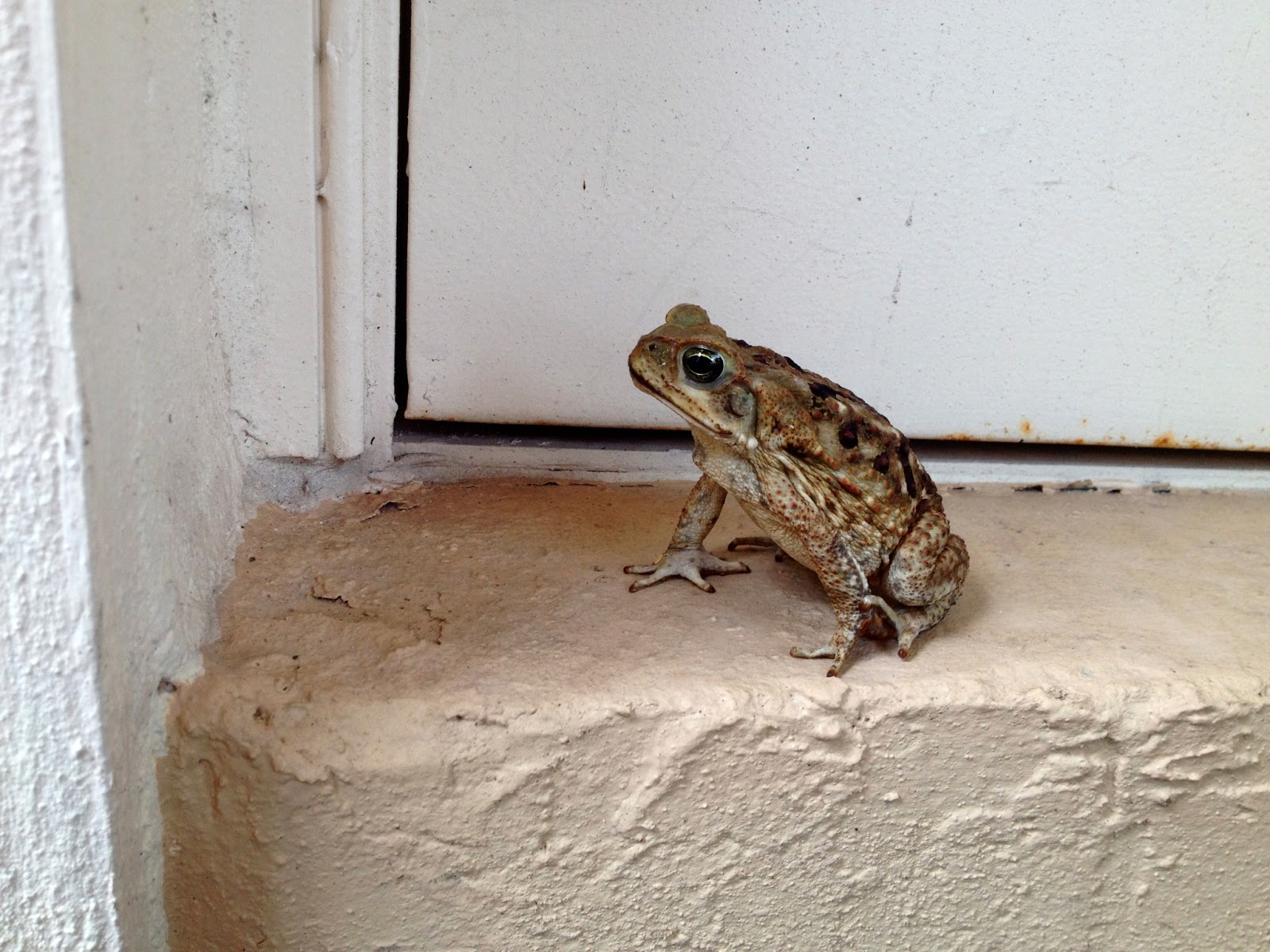

   You may also be wondering why I have a toad as the first picture. I'd noticed that there weren't any dead bees around the hive and figured the ants had been taking them away. Then I noticed a toad when I went to do some evening hive checks, the week after that there were two toads, then three toads. Soon enough, all three toads stayed nearby day and night. It's the time of year where toads are reproducing so it's wasn't much of a surprise, but the lack of bees was still a mystery. 

   Then one day it clicked after seeing a dead bee get gobbled up by a toad. These three had made my backyard their home! They were hoovering up any and all bees that they could! All of this really has nothing to do with beekeeping. They were like my clean up crew, minus the massive poo logs they left everywhere. I just thought it was funny. They ended up disappearing after moving the Dothraki and Casterly Rock out to the bee yard. Sorry toads!


   As for the hives, everyone is doing quite well! Winterfell and Casterly Rock are both solidly building up their second Deeps. I was going to do a check on Winterfell today but got delayed due to rain, and by the time I got out to them they were mostly home, which means testy guard bees. So they'll get checked tomorrow. The above picture is from a check of Winterfell from two weeks ago. For anyone who hasn't seen it before, that's what drone comb looks like when normal brood comb (on foundation) is expanded to fit drones. Drones are much larger than the worker bees, so the width and depth of the individual cells needs to be expanded. A drone cell in the works can be seen just to the top right of the photo's center point.

A larger view of the drone frame. Solid white capped band of honey along the top, with eggs and younger larvae in the middle, older larvae and capped cells at the bottom.

   Casterly Rock thoroughly built up all 4 frames and will be getting their last 6 frames in the morning. 

   The Dothraki have also moved into a full size hive! They're doing very well ever since their new queen began laying. Something interesting was noted since they were also given two frames of comb from a cut out that I did. More on that with the next post though!

    I was also only able to do a quick observation on the Wildling hive due today's weather delay. No real update until tomorrow. They are happily going about their business though!

Fun Fact: Galleria mellonella may have the highest hearing sensitivity of all animals. They can hear ultrasonic frequences up to 300khz.
   If you haven't seen a wax moth before, this is what a wax moth looks like. Specifically, the Greater Wax Moth (Galleria mellonella). It belongs to the snout moth family, so it looks like they have little stubby "snouts" on them similar to a dog's snout shape. These things are bad news! If they gain access to a hive that hasn't built up to fill their living space then these moths can cause some serious havoc. Their larvae will hatch, eat comb, and leave a messy, silky mess everywhere. No bueno! This one tried to Solid Snake itself in when I was checking the Widlings. Thankfully I noticed a dark shape on the underside of the new frames, which wasn't there before, when putting the inner cover back on the Wildlings. Shame that they're so nice to look at... it got squished.

I'm going to keep this entry short, since it's just a summary, and there's a good deal to write about the cut-out and how-to's of the honey extracting! Expect the cut out entry to post tomorrow morning. I'm going to write it tonight, but I'm dedicating some time every night to learning HTML5 and CSS for building Zeekeeper.com. So it'll probly be a little too late for most people to read. Blog posts made good morning reading over coffee anyhow. Lots of HD pics will be included as well :)

Monday, June 3, 2013

Hive Inspections: Queens, Queens Everywhere (And Rain)


   It's been raining... a lot. For anyone not in Florida, I don't think you can truly grasp our levels of rainfall. We may as well have had a tropical storm sitting over this part of the State for the last week. Normally that's not a big deal. It's nice to stay in and read a book to the relaxing sound of the rain. However, it wasn't so fun now that I'm keeping bees. The girls were rearing and ready to go each morning, stretching their wings while clustering at the hive entrance and zooming out over the lake.

   However, almost like clockwork, at 10am it would start drizzling. The foraging bees would all start returning, and soon enough there was heavy rain coming down. During the worst of the flash-rains there would be bees flying through rain so thick, and consisting of such giant raindrops, that there wasn't even 100ft of visibility. Occasionally some would get shot down only a few feet from the hive, and one day I scooped at least 30 bees off of the ground and surrounding puddles. I'm sure they could get out on their own, eventually, but I was there to help them so I figured "why not?". Their delicate wings would get stuck to the ground by the surface tension of the water, so I picked them up instead of letting the toads have a buffet.


   Eventually, the rain would slack off or stop for short periods of time throughout the day. However, I'm sure the bees can sense the change in barometric pressure and know that the rain isn't finished yet. So at every opportunity they would just swarm the feeder jar on top of the hive. Both patio hives went through full jars of syrup in 48 hours, and, one particularly rainy day, the larger of the two patio hives chugged 3/4 of a jar in one day!


  This was a pretty normal sight for every afternoon, bees all over the jar lid and others walking around below picking up any spillage. On the day that they chugged 3/4 of a jar, this entire area between the wood bars was practically swarmed by the bees. If they couldn't forage, then by golly they were going to do their best to empty that jar!

Casterly Rock


   Speaking of the patio hives, I've decided upon a name for the most recent feral hive, Casterly Rock. These are the girls that I had cut out from the giant tree pot, and this is their queen! She's a beautiful, dark scarlet and practically blood red. What a badass. If it wasn't for pulling frames of brood for the Dothraki to make a queen from, they'd be my #1 hive in terms of frames filled out + number of bees. They're definitely still #1 in population, but a bit behind Winterfell due to the frame borrowing. I have no doubt that they'll surpass Winterfell as soon as the constant rain slacks off. It probably helps that whenever they're out of syrup, I'll go and make them a fresh jar. Winterfell on the other hand is not being fed very often, and I've actually stopped feeding them, for the moment, in order to pull a frame of honey in the near future.


   If you're wondering why I'm so confident with Casterly Rock, just take a look at this frame. This is a thing of beauty right here! That whole top row of white is finished honey, the row of orange underneath is pollen/bee bread (a fermented mixture of nectar + pollen + bee enzymes) that is used to feed the young, the entire rest of the frame progresses from eggs in the empty looking cells, to young larvae, to mature larvae, back to young larvae, and then finally more eggs. I can't wait to see this frame all capped up. It's going to be an almost solid sheet of capped honey, filled cells of bee bread, and capped brood.
 
Notes: 
Pests: none, Brood: 5 frames (Eggs/Larvae/CappedBrood/Drone, another frame given to Dothraki) with solid laying pattern, Honey: 2 frames (Honey only), Syrup: 3 mason jars in one week

Dothraki


   FINALLY, the Dothraki have a Khaleesi (queen)! I knew that virgin queen from the other week had been stung to death! Doubts were starting to creep in that maybe she hadn't been stung, that maybe she was their victorious queen, but had been injured/gotten sick while on a maiden flight. Nope, that virgin queen had indeed been on the losing side of the May 2013 Khaleesi Thunderdome.

   Sorry for the poor picture quality by the way. I'll get a better picture in two weeks. I'm going to leave them as undisturbed as possible, that way the new queen will feel secure and be confident going full steam with egg laying. I didn't see any eggs today. However, queens start out laying slowly, and ramp up their rates of egg laying as they mature. I also didn't inspect her frame (the last frame actually) all that thoroughly, because I didn't want to spook her into flying off.

   Lots of honey built up by these girls, lots of pollen stored away, and lots of drawn out comb (mostly thanks to pulling from Casterly Rock). Funny thing is that two days ago I had pulled a full frame of brood + eggs from Casterly rock to give to the Dothraki. I had inspected this hive for a queen and hadn't found one. So apparently she must have been out on her maiden flight or I simply hadn't found her. No clue. I was extremely surprised to see her today!

   The Dothraki are set to start exploding in productivity. I did see three hives beetles in there however... I attribute that to having low numbers until only recently. Two of them were crushed, and the third one escaped behind a frame before I could put down the frame that I was inspecting. I'll get that little bastard next time.

Notes: 
Pests: Three hive beetles (two dead, one escaped deeper into the hive), Brood: 4 "Super" frames (Larvae/CappedBrood), Honey: 1 frames (Honey and Pollen), Syrup: 2 mason jars in one week

Ren


She thinks hive inspection day is great. It means at least an hour of hunting lizards and running around. Time for another nail trim too!

Wildlings


   These girls are doing really well. They've been stockpiling honey and pollen for entire time that their queen was maturing. Pictured above is a "free form" Super frame of 90% capped honey. It's tempting to steal a small piece to try it, but it's not worth setting them back at all. Not to mention that they've been fed syrup pretty regularly, so chances are it wouldn't taste very strong in comparison to legit honey.

   Speaking of feeding... I'm going to have to build a real hive stand for the bee yard. I noticed that they were draining their feeder rather quickly. Upon closer inspection there were some ants walking around near the entrance. After pulling the feeder jar out I could see a good twenty or so fire ants on and around the feeder. Argh I hate ants! They weren't invading the hive since there were cracks in the plastic feeder that they could fit through, so no problem there, but that's food for MY bees, not you ants!

   So how to fix that? It's pretty simple. I'm going to have to go pick up some 2x4s to assemble into a long frame with six legs (two on each end, two in the center), and sit each leg in a can of water & motor oil. That way the ants won't be able to cross the liquid and climb onto the legs of the stand. It's just going to take some elbow grease to make it happen.


   The Wildlings have also been drinking again (typical Wildlings), and have gone to work drunk. Look at this crazy comb that they've built. Pretty awesome to look at, not so awesome in terms of functionality and organization. I had to scrape it off with my hive tool and set the pieces at the hive entrance for them to clean out the collected nectar. Other than that though, great looking hive! I set them up with a Deep as their second stage, the first stage is a Super. Once they start filling out the top then I can change around the order, with the Deep on bottom and the Super on top. THEN I can move the queen into the Deep, with the queen excluder on top of it. That way the brood comb can hatch out completely, and the queen can continue laying down below. Once the brood comb in the Super is completely hatched out I can remove it completely, and put a second Deep on so that it goes Stage 1: Deep, Stage 2: Deep, and they'll have their full strength hive body. Everything else on top will purely be for clean honey production. 

Notes: 
Pests: One hive beetles (crushed), Brood: 5 frames (Eggs/Larvae/CappedBrood) with solid laying pattern, Honey: 2 frames (Honey only), Syrup: 1 mason jars in one week

Winterfell


   Winterfell has drones! How cool is that?! The one in the center of the picture with the fat abdomen, larger wings, and eyes similar to house fly is a drone. Just think of those massive eyes as the goggles of a fighter pilot. Their whole physiology is based around mid-air acrobatics in order to be the first to link up with a virgin queen. Even if afterwards their whole "situation" gets ripped out of their bodies. Afterwards they'll die... still a better love story than Twilight.

   Their feeder was removed from inside the second Deep and replaced with the last three frames. Other than that, I didn't bother them too much. They had spread well throughout the second Deep and had a good amount of surface area covered when I took the inner cover off. It seems the feeder encouraged them to start moving through the queen excluder too, since there was a bit of wax buildup on a few second stage frames. They still have three frames in the first stage to fill out, so I'm not too concerned about it. The main purpose of the second stage being put on this soon is to inhibit swarming. 

   Swarming is when the original queen takes off with half the hive to start a new hive, while the remaining bees raise a new queen to continue the original hive. Swarming will occur when they run out of space to expand, and feel "cluttered". So to avoid that it's best to add another Deep or Super on top when they've reached 7 frames. That gives the beekeeper plenty of leeway instead of waiting an extra two or three weeks, and then it's suddenly critical that the next stage is added immediately.


   I didn't do a thorough inspection of them, since that would require taking off the lightly populated second stage, taking off the queen excluder, and then going through the first stage. There is already one dead hive directly across from this one, on the next pallet over. That one has pretty much just been a beetle farm from the looks of it. If the covers are kept off for more than ten minutes then I'll start getting beetles flying over to land on the lip of the hives, it's disgusting. I'll be moving all of my hives to a different area of the property once the stands are finished. 

   Winterfell is strong enough now that there isn't much to worry about with them, outside of ant infestation and varroa. So they'll be fine to go for another week without invasive inspection. I did, however, see one beetle land at the entrance after placing a piece of nectar/honey-filled stray comb at the entrance for the girls to clean out. The smell must have attracted the beetle. Winterfell proved it's mettle though, with the guard bees blocking off the beetle from the entrance and chasing it up the exterior of the hive. I grabbed it as soon as I could and crushed it. 

Notes from gazing down through the queen excluder:
Pests: One hive beetle (crushed, attempted to enter by the front entrance, was blocked by guard bees and chased up the side of the hive box where it met it's fate), Brood: 6 frames (Eggs/Larvae/CappedBrood/Drone) with assumed solid laying pattern, Honey: 2 frames, possibly 3 by now (Honey only), Syrup: 1 mason jar in three days


   This has truly been an excellent week for the bees. Two new queens in two weeks, second stages added to both Wildlings and Winterfell, Dothraki having massive stores of bee bread for the new babies, and Casterly Rock being ready for a move to the bee yard where they will receive their second stage. I can finally sleep completely soundly without any stressing over queenless hives falling behind.

   Not just that, but a good friend of mine has decided to help me out with a logo for the upcoming wax products (lip balm, etc) and honey. I can't wait to show her design off! Exciting stuff! 

Tuesday, May 28, 2013

Hive Inspections Pt.3: Trailer-Home Cut-Out & Winterfell Is Stacked


   This cut-out was actually done the day before the hive checks, and I wanted to cover it before going into the bee yard bees. Mainly because it involves hive beetles, a pest that's very relevant to my bee yard bees.

   Mike contacted me in the morning to see if I could help him out with a cut out involving a trailer home. He had a job to do in the morning, and would be starting the trailer home around the time that Algebra was finishing up. It was also right down the street from my house, so it was a perfect opportunity for more experience. My face was still swollen pretty hardcore, but everything I've read says that heat is a great treatment. So if anything, sweating it out in a bee jacket under the Florida sun would be healthy. 


   Upon arriving at the trailer, Mike joked about how I'd gotten lucky, and that it was only a small hive. Brendhan (owner of Bee Barf Apiaries, the primary removal contracting company) had mentioned to Mike that it'd probly be a good "learning experience" due to just how massive trailer home jobs usually are. Apparently the last one they'd done had been half the length of the ENTIRE TRAILER HOME. What a jokester haha. 

   The bees were quite nice, even with how rough I had to be in order to cut away the insulation they were behind. Now, normally removal is done with a full suit. That way there's a minimum of seams for the bees to crawl into. I don't have a full suit, just a jacket with attached veil, and when things are in turmoil bees naturally want to crawl into small, dark spaces. That includes jean legs. 


   As a matter of fact, one got up my jean legs and climbed as if she was going up Everest. There was no backwards motion at all, even when I blocked her off by closing off her vertical progress by gripping my leg. She was on a treasure hunt for some valuable jewels and there was no way to get her out without the jean material pressing down on her, which would make her sting me anyways. So, unfortunately, I ended up having to slap her, hoping that she'd only get a light sting in. Nope, that stinger got buried to the hilt in my knee. Granted, my face was already swollen up from the previous days sting, but this one ended up not being too bad. I also got stung through one of the seams in my glove's finger joints. However, Neither of them swelled at all, and, again, the stung hand was very free of stiffness. It was nice!


   Here you can see the length of the stinger, it's the red line pointing downwards. Those little swords are retty impressive huh? It must run lengthwise inside for about half the length of their abdomen. I'll have to look up the layout of their internal abdomen anatomy. Stingers are actually two separate serrated-edged "blades" that are positioned side by side with a channel between them. The venom is pumped down that channel and into the wound. Contrary to old wisdom, recent research has shown that it's prudent to just pull out the stinger immediately. Use your fingers or nail to scrape/pinch it out, it makes no difference whether the poison sac gets compressed. It's going to keep pumping, like a little heart, the entire time you scramble around for a credit card to scrape with. The amount is so minuscule that it's going to empty out in the time spent searching.


   Anyhow, back to the cut-out. Overall they were healthy! The laying pattern was nice, and there was a minimum of hive beetles. However, take a look at that picture. I didn't notice it at first, but do you see all those larvae with dark heads? Those are Small Hive Beetle larvae, disgusting little bastards. Due to the insulation being just inches from the hive, and being a nice loosely packed, moisture-holding medium it was perfect for the beetles. These little buggers would pupate into a ton of hive beetles, and those might be enough to start sliming up honeycomb with more larvae. Once the comb is slimed, the bees want nothing to do with it. They'd eventually either move to a larger compartment underneath the trailer, or evacuate completely. So it was a good thing for these bees that we got called in!

   This is another reason to make sure there are oil-filled trays under each hives screened bottom board. That way the bees can toss the beetles to their oily death, and the beetles can't lay their larvae in the ground directly underneath the hive. Beetles can fit through the grating, so without an oil tray it's just one massive entrance.


   The cutting out of the comb only took about 30mins, after that it was a matter of finding the queen. In such a tight space it was pretty impossible to move around enough to check all the bees. Mike made the call to vacuum them up. His vacuum has been modified so that the inside of the vacuum tube is smooth, minimizing injuries from bumping around, and the vacuum itself has a suction control. That way he can set it to the minimum level of suction needed to suck up the bees, also minimizing the friction. Instead of an open chamber and filter, they're suctioned into the above box. We knew we had the queen when the remaining bees started to cluster around the screening. That meant they smelled the queen's pheromones and were trying to stay with her. 

   After that we packed up and Mike took the bees of to their new home in his bee yard. Couldn't have gone any smoother without having secured the queen in a clip!

Winterfell


   Now we move forward again to Thursday, which has been the most exciting "bee day" yet. Winterfell is finally ready for a second hive body! 

   I arrived at the bee yard, cleared out more brush on the way to the hives, and this is the first image I saw. At first it was a bit concerning, since it was actually the day after they were meant to receive their new hive body. They'd been looking a bit crowded the week prior, but I just hadn't been able to take a long enough break from school and work to properly paint a new Deep box with multiple layers of primer.

   Thankfully though, upon giving them a look, it was just normal bearding. As you can see, they have an entrance reducer (wood bar with different opening sizes cut into it) and they simply didn't have enough entrance real estate to spread out along the entire thing. This is just typical "bearding" behavior, where a portion of the bees hang out on the exterior of the box in order to cool off and help maintain internal hive temperature.
   

   I should have taken a picture prior to putting the queen excluder mat on (gridded grey square) the top of the hive. The whole top surface of the bars was covered in bees! It was awesome! These girls are busy, and definitely need this new hive body! Now, they'll start storing honey above, and gradually transitioning out the honey frames below. This way way the queen will fill out more and more of the bottom box's frames with brood, while the bees move their honey storage to the above box. The excluder will keep, or exclude, the queen from the top box. That way she'll fill out the bottom box and I can pull a couple frames of honey from the top box once it's finished. I can't wait to taste it!

   I didn't check the hive over in depth. I saw a few eggs and lots of healthy comb from just pulling the frames up by only a few inches. The queen is still doing her thing and the colony is very happy. No stress buzzing from these bees. They were also so busy that only two guard bees came by to inspect me.

   All in all, I couldn't be happier with these Italian-Carniolans and would definitely recommend any beginner to purchase their nucs from Steve over at Bee Healthy Honey Farms. He's a great guy, cares about his bees, and these girls are definitely proof of his hard work!

The Wildlings


   There really isn't anything to cover about the Wildlings this week. I'm leaving them alone until Thursday. They had queen cells last week and they should have hatched out by now. I don't want to risk accidental damage to the new queen, and I don't want her to get spooked. Everyone I've spoken to has recommended leaving the hive untouched for at least two weeks as well.

   There was some crazy vine growth leading up to their entrance, so I cleared that and took their empty feeder jar to refill at home. Sugar syrup is being chugged like mad, so they're definitely keeping busy! I'm not all that concerned about them to be honest. They're a good starting size and, if need be, I can pull a frame from Winterfell for them to build new queen cells. 

   Most would just say "Hey Charles, why don't you just buy replacement queens?". That would be the easy thing to do, but my main goal is to breed hardy, hygienic bees. Feral bees are healthy, proven bees that are able to thrive so well that they reproduce. Remember that honey bees reproduce on a hive level. Any wild swarm is, usually, led by a successful queen that has survived varroa mites and other pests without any "help" from humans. Those are the bees we want as beekeepers. On a large commercial scale, honey is a secondary product of successful bees, while pollination is the primary "product". If the Wildlings and Dothraki can be guided to full health that will be two more hives that can each be split twice in the next twelve months, creating a total of eight hives from just those two!


   That sums it up for this week's hive inspections. Pretty busy, huh? All of this with full time summer classes and working part time, as well as making sure my Kai Ken puppy (Ren) gets all of the attention she deserves. It's a lot of work, but very rewarding. Especially beekeeping, it's part therapy, part physical workout, and part meditation. It's very mind-cleansing to work in agriculture. It gets you back in touch with a part of life that a lot of people are missing out on, and that's the connection with our roots as Earth dwelling mammals. The woods and nature are part of us, and many studies are showing that without we get very stressed out. 

   If anyone reading this thinks that they might like beekeeping, then you should definitely give it a try. It's as involved as you want it to be. Set up a self-made "top bar hive", get some bees, and let them do their thing. Check on them every two or three weeks to make sure there aren't pest problems, and let the bees do their bee thing. They'll make you happy, make your garden a lot more productive, and you'll be doing a good thing for wild bees as well.

   See you next post!


Saturday, May 11, 2013

Hive Inspections: Winterfell is feisty, Wildlings & Dothraki stage a revolution


Wow! Lots of changes in all three hives since last week. I did the inspections on Thursday in order to keep a solid inspection schedule. I feel this is very important when it comes to beekeeping. There are already so many distractions in modern life, and without committing yourself to a consistent schedule it will be very easy to fall behind. "Oh I'll just do it tomorrow, I just feel like watching tv today." could very well turn into more procrastination the next day. Just a few days is all it takes for a hive to fail cascade when at this small of a size. Now, don't take that to be scaremongering. If anything it should be encouragement to be a responsible caretaker of your bees, and you should already be super excited to visit them anyways! It's amazing enough to just watch them coming and going, and it's even more amazing to open up the hive to see what your bees have accomplished under your care!


Dothraki Hive

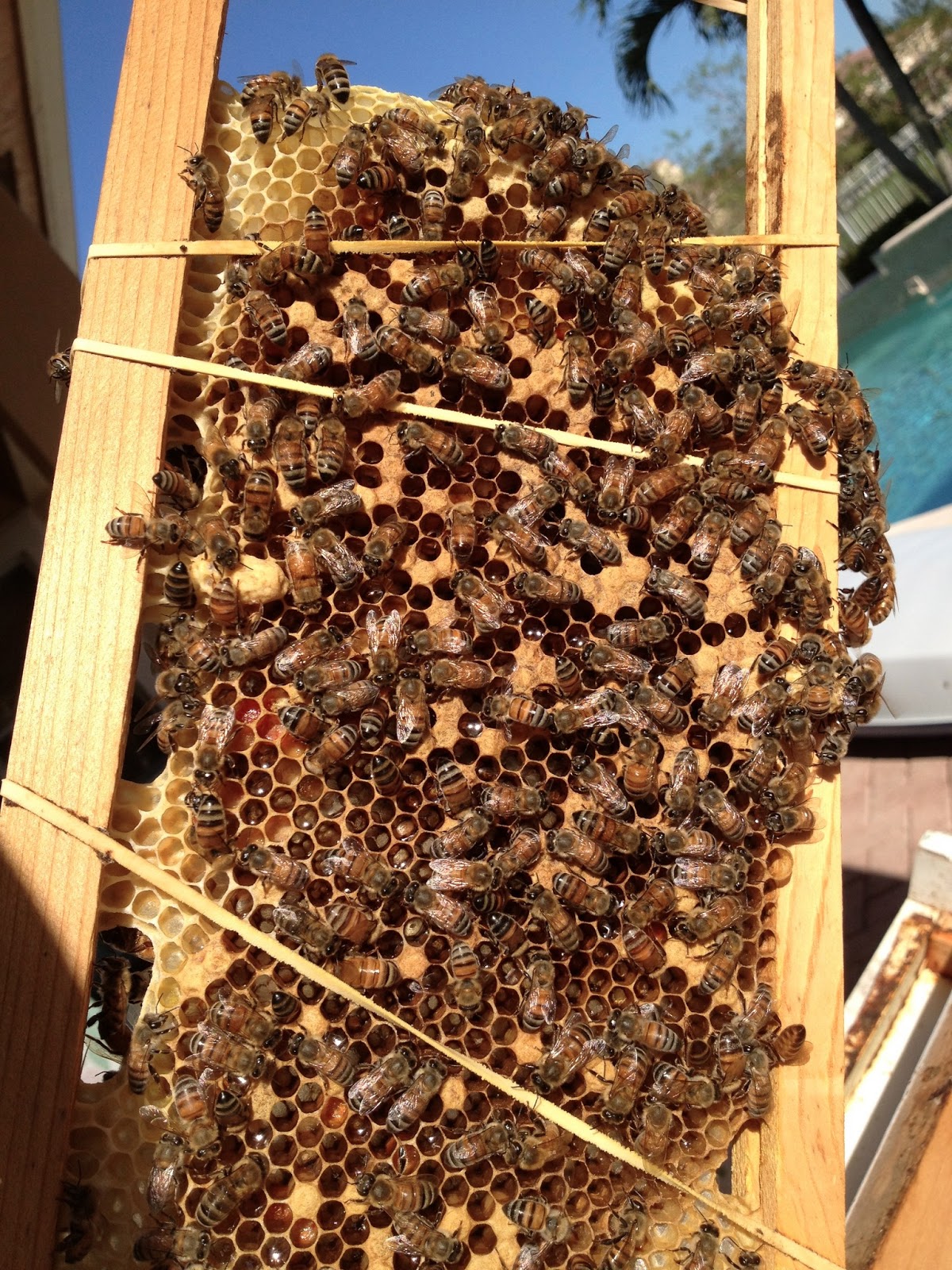
So it had been exactly a week from when the Dothraki bees got a new frame of brood for queen production. I inspected them first, since they're on the back patio and I don't even need to leave home for that. All of the queen cells are capped up, there's plenty of open honey with a good percentage already capped, and a really nice bouquet of pollen as well (which you can see in the very top picture). The pollen ranges from completely white, to pale yellow, to neon yellow, and then both dull orange and neon orange. There are foragers coming and going at a constant rate. I'd say about one in every eight bees is returning with their pollen baskets loaded. That's a pretty good ratio it seems, judging by the good stored in the hive. All of the queen cells have been sealed up as well. So in another week and a half or so, there should be a duel between the first two queens to decide who rules.

Apparently there was a drone cell on the frame that got transplanted from the Widling hive. I caught an awesome video of him getting kicked out. At least, I'm 75% sure it's a drone due to being a bit larger and darker, but it may have been a robber/stray bee as well. I didn't think to check at the time if it was a drone, since they don't have a current queen to have been producing them. The bees are also chugging syrup and building up lots of comb. I'm thinking they're taking the readily available food and only sending a few out as foragers due to smaller numbers, only one frame of brood, and it being riskier to collect nectar than it is to just hit up the entrance feeder.


I recommend watching in a high definition and expanded size

Notes: 
Pests: None, Bees: 2 frames of bees, Brood: 1 frame (L, CB, 4 sealed Replacement Queen Cells) with scattered laying pattern from Wildling queen, Honey: 2 frames, Pollen: mixed well among 3 frames, Syrup: 4 cups since last week


Wildling Hive

Last week when I pulled out the frame of brood I didn't look for the queen, but I did look for eggs. Looking for eggs is the fast way to check for a queen's presence. Eggs take on three positions as they mature: straight up on the first day, leaning like the Tower of Pisa on the second day, and then a very low lean on the third day prior to hatching. I saw eggs on day 2 so that means the queen was active in the last two days. No need to find her when she's been active that recently, not to mention that nature was getting ready to douse the hive and I in heavy rain. The first frame I pulled out had about 3/4 of one side with honeycomb, nice and heavy. Then as I went to set it back in I noticed a queen cell on the next frame. Upon checking the rest of the frames, the girls have not just 4 queen cells like the Dothraki, but SEVEN queen cells on just two frames of eggs. They were solidly capped cells, and they even made a crazy trio of queen cells. Of which each is only seperated by one non-functional cell from the other. That's sort of Hunger Games'ish, training and growing right next to the same people that will soon be trying to kill you.


I'm going to guess that stormy day last week with drizzling rain eventually coming down on the open hive + the inconsistent/scattered laying pattern of the original queen had the bees decide that it was time to replace her. Too many stresses at one time to tolerate an underperforming queen. Remember that this was the original queen from their old hive too, so she was already aged. Still strange though that both feral hives have fired their original queens. These bees have also consumed less syrup than the Dothraki hive. I'm guessing that it's most likely due to them having higher numbers of foragers and a good sized, productive farm 50ft away.

So within a day or two of the Dothrakis, these 7 queens should be thunderdoming it out to decide the victor in a brutal fight to the death. At least the first 2-4 will, the winner from that will then either face single challengers as the others hatch out, or the winner of the first fight will achieve victory quickly enough that she can go around the frames, killing the remaining queens as they lay helpless in their cells.


Other than that though, the hive is extremely busy. Lots of bees coming and going, about one in six bees has pollen. They've started building up another frame with comb, which makes up for the comb given to the Dothraki. Plenty of honey is in storage, not too much capped outside of some extra capping of their original comb. Then again they've only recently built up full sized cells on the foundation, the rest has been pre-existing comb that is rubber banded into empty frames. No big deal there, they're obviously happy and getting enough from the surrounding area that they aren't chugging from the feeder. There's also lots of brand new larvae (very small, compared to the fat larvae who are about to spin cocoons) and capped brood, so I'm not worried about numbers with this hive at all.

These bees were taken from a water meter cut-out and transferred into a Super sized nuc box, so that means they're on 3/4 sized frames. I didn't want them building wax down from the frames and attaching onto the bottom board. Not only would that be an incredible pain to get the screening cleaned out, but that'd be a ton of wasted wax for the girls when they need 100% material and labor efficiency. The day before I had gone down to South Florida Bee Supplies and picked up a Super box, as well as a nuc box (to be used as a hive trap), total of 30 frames (10 Super without foundation, 10 Deep without foundation, 10 Deep with foundation), another feeder, and some queen lure. So I spent about 10mins getting them transferred from the Deep and into the Super. The Wintefell hive was used as a table, which was actually a pretty poor idea.


Notes: 
Pests: One beetled that was imprisoned between a frame and hive wall (now dead), Bees: 3 frames of bees, Brood: 2 frames (L, CB, 7 Replacement Queen Cells, minute scattering of drone cells) with scattered laying pattern from previous queen, Honey: 3 frames, Pollen: mixed well among 4 frames, Syrup: 2 cups since last week


Winterfell Hive

Just look at that fresh, beautiful pure comb being built up on that foundation. That's frame seven, counting from the left side of the hive with entrance facing forward. These girls have frames two through seven built up with comb! They originally only had three frames built up with the fourth only just starting to be developed with small flecks of wax. All that in just three weeks. These girls are busy!


They also got a little fiesty haha. I hadn't given it much thought at the time, but all the vibrations and bumps from using the Winterfell hive as a table had gotten them nervous. It sounds obvious now, but it wasn't under 90F in the sun and I'm trying to be quick in order to not let the new wax get soft. Using only a veil for protection, I lifted the top off the Winterfell hive and started inspecting frames. I got two frames in and, due to sweat, had to suddenly tighten my grip on a frame in order to stop it from slipping. This jolted the frame and a single bee shot out like a little missile, buried herself in the top of my hand, and then grinded the stinger in deeper like she was at a club in Miami. Now, I'm no stranger to painful insect stings. Fire ants are the devil incarnate, but they're tiny and easy to brush away. It's a whole different thing when you have a full sized bee on your hand, and through the thoughts of "MOTHER OF GOD, IT BURNS!" it seems massive. It was definitely more of a surprise factor than a pain factor. I've never been stung before, so it was a bit more than I expected. That coupled with the visual of the bee on my hand, and the natural fight or flight instinct to run away from the danger, had me pretty surprised.

I did have a full frame of bees though, and dropping that would only make things worse. I lowered a corner so that it rested on another frame, then quickly (don't do that, be slow and smooth) pulled my hand back to brush the bee off. The fast movement + danger pheromone from the sting attracted three more bees right away. They started buzzing the stung hand as I lowered the frame back into the hive. After putting the frame back, I tucked the stung hand into my armpit to minimize the pheromone release and walked away from the hive, back to the van (about 30ft away).

For those that don't know, the stinger is coupled to a poison sac, that poison sac is attached to the bee's insides. The stinger is actually two serrated barbs, with the poison running down the channel between the two. Upon stinging, the whole package is torn out of the bee and the bee will die after a short time.
It really didn't hurt that much to be honest. It's just the newness of it and the reactionary "Oh crap!" of the primitive part of the brain. I ended up watching the poison sac pulsate for a few seconds because it was neat, then scraped it out with a credit card.

No time to lick wounds though, there's work to be done! Unfortunately my smoker was being a pain in the butt, so I just tossed on the jacket and gloves to get the rest done. The leather of the gloves will cover up the smell so that the bees don't get stressed from smelling the alarm chemicals.


Back at the hive, the next frame was the main honey frame. Wow this was heavier than I remembered. The outer side, which had nothing before, was now solid honey! As tempting as it is to steal some honey, they really need it to continue expanding at maximum efficiency. Plus I picked up some avocado honey from the supplier visit, can't wait to dig into that once my tongue heals up from it's hot sauce chemical burns. Long and unrelated story, but I tried the hottest sauce at Tijuana Flats, ow. Next up was what used to be a honey frame. The inner side now had eggs and capped brood. Just look at that solid laying pattern! That's what a healthy queen looks like, solid sheets of young from the same timeframe of laying. That really is beautiful to see, and photos just don't do it justice. Also, that funky looking, protruding circle cell is a drone cell. It's just being built off of a normal sized cell. Drone cells are good at this stage! This means they are happy with how much food they've built up, the health of the hive, and are confident in their queen. Drones (males) do no work whatsoever, they just sit around eating and being freeloaders. They do fly around looking for a queen to mate with, but if they're kicked out then they will go to a Drone Congregation Area to hang out with their bros.


This is the frame opposite of the one above, frame three. This frame has been freshly drawn out with wax and has a freshly laid sheet of eggs interspersed with a very small scattering of late stage larvae (the white filled cells). It looks like the queen passed over this frame while it was being made and decided a few cells were built up enough to lay few eggs. Five or six days later she came back to this frame, nodded her approval, and laid down a sheet of eggs. I'm actually really happy with how this picture came out and am probly going to make it my background. I love the angles and design of the comb, so precise but still organic. The lines formed in the corners make it a bit trippy too.

I did find the queen herself, not because I was looking for her, but just because there was a clump of bees on the side. She always has an entourage so I briefly scan any clump of bees I see. It's also just getting easier to pick her out by subconscious recognition.

Overall, I'm VERY very happy with these bees! Even if it was the "domesticated" bees that stung me first, and not the two feral (and supposedly more africanized) bees haha. I saw one hive beetle, but I'm pretty sure that's only due to having walked away with the cover off after getting stung. The beetle got contained to the lip of the hive by the bees, where I happily crunched it with my thumb. After crushing it in front of the guard bee assigned to it, the guard seemed to be like "Oh, hey thanks, time to take a break" and then just walked back into the hive without inspecting my thumb. It seemed pretty funny in the moment, maybe it was just being dehydrated, shot up with bee venom, and on an endorphin rush.


Notes: 
Pests: One beetle (dead, most likely from leaving cover off for a few mins and walking away), Bees: 5 frames of bees, Brood: 5 frame (E, L, CB, Drone) small number of drone cells, Honey: 3 frames, Pollen: mixed well among brood frames, Syrup: not currently being fed

Sunday, April 28, 2013

A Ridiculously Busy Day Part 1: The Cut Out


There's been so much going on the last few days that I'm going to have to do this in two parts. I don't think anyone wants to read a book in one sitting haha. Thursday started at 8:30 with an hour drive to Loxahatchee (near Palm Beach Gardens) to help with a cut-out and possibly take home a feral swarm of bees. Followed by that was another hour drive back to go straight to work at 5pm. Then while at work I received an unexpected phone call about a local lady who called the Broward Association to report a swarm of bees in her tree. That was from 8pm until 11pm. What a day!


The Cut Out

The location for the cutout was West Loxahatchee, a very rural area by South Florida standards. The property had been foreclosed on a while back and was being attended by a management company. A few days prior, one of the lawn men had been riding a mower and come across a football sized clump of bees on the lawn. He called it in to the property management company and they called it in to Brendan, a fellow Palm Beach Beek Assoc. member and redditor (/u/brendhan), who in turn called Mike to assign to the job to. That clump on the lawn was a swarm, which we will soon find out happened to be very significant to these bees.


I woke up at 8am, took Ren (my Japanese Kai Ken pup) out to do her business, packed my stuff in the car, and set off for the hour drive to Loxahatchee. I was all set to go with my jacket, smoker, queen clip + nuc box, and giant thermos of ice water! Mike sounded like a real experienced, relaxed, fast-is-slow-and-slow-is-steady kind of guy, and had me looking forward to a very educational experience.

The traffic was a bit more than expected, so Mike had already found the entrance to the hive and set up the ladders by the time I arrived. After doing a once-through of the house, listening to the walls for buzzing, feeling the walls for hotspots, we concluded that the bees were concentrated in the eaves of the house. So back outside we went. We suited up, smoked the entrance a bit, and started working the board on the edge of the house/roof. This single board ran the entire length of the house so we ended up having to dig out the nails with hammer and mini-crowbar, eventually cutting the board down at about 10ft in length. There were a LOT of bees, which ended up being another strange thing. The hive itself was split up into three parts as well due to wooden support boards for the roof. If you look at the picture right above this you'll see the yellow comb, preceded by a bunch of bees. The area with bees is one section, then there's a board, then there's the honeycomb. Before the bees is another section of honey/brood comb (it was weird).


We began by cutting out honeycomb with a small paring knife, and got our first sign that something was wrong with these bees. Now normally beetles don't give me that skin crawling reaction like when there's a ton of scavenger insects (ants, bunches of roaches, etc). In this case however... there were just soooo many beetles it was truly disgusting. In this picture you can actually see a dead one that has drowned in the unfinished honey. They're small, scurry quickly to get away from the light, and have a parasitic relationship with honeybees. In short, they're pests. In a healthy hive, especially a feral one, the guard bees will corral beetles into cracks in the hive walls. Once corralled, the bees will actually imprison them by sealing over the cracks with propolis. Or, in the case of screened bottom boards for human-kept hives, the bees will shove the beetles out through the screening. These bees were not managing the beetles whatsoever, and on every comb we took out there were dozens of these little fiends. I truly felt bad for these poor bees.


A quick detour from the play-by-play... I was scanning bees for mites with every panel of comb that we took out. However, there was only a single varroa mite that was apparent with at least five thousand bees scanned over the entirety of the wax taken out. Mike and I talked about what options there were for the hive, and decided that even if the comb wasn't salvageable that he would take the bees to combine with another recovered feral hive that was low in numbers. The bees were incredibly good natured. Even with the sawing of the boards covering the hive, cutting out the comb, scooping up bees in a large Taco Bell cup, and all the chaos we were causing, neither of us were stung. The only stings received were on my gloves when manually scooping them up and being too rough. There were a few workers hatching out while taking out the comb so we gave them some time before dumping the comb in bins. The above picture is a baby bee who is covered in downy white baby bee fur, even on their head!

Like I said, very gentle bees!

Anyhow, back to the action. After cutting out the far right sections of honeycomb, we moved on to the central panels. These panels were very dark brown in color,  meaning it was very old brood comb which had birthed many a bee. But... there was honey throughout all of the brood comb. A normal comb of brood should have an outer "band" of honey, with a band of "bee bread" next, followed by a central area of brood (eggs + larvae + capped brood, or at least larvae + capped brood) with a solid laying pattern. These panels looked like someone had a shotgun loaded with shells of capped brood and loaded the brood on with it. The terminology used is a shotgun pattern of brood. Maybe 10% of the panel was brood, the rest was unfinished honey crawling with beetles. Gross.

We set up a single frame of recovered brood cell, rubber banding it in place on the frame, but then decided at that point it was a lost cause. There were no eggs whatsoever, no larvae anywhere, and a huge Charlie Foxtrot of Small Hive Beetles on every single piece of comb. The swarm of bees found by the landscaper filled out the rest of the story. There was something wrong with this hive. The queen was either sick, injured, reaching the end of her fertility, or something along those lines, and for some reason had decided to swarm. She must not have been laying in the time leading up to the swarming. The remaining bees were left without any eggs that were able to be raised into queens except for one. We found a single queen cell that was their sole hope for survival. If that queen failed to develop then the hive would die.

Even if the queen did hatch, there was such an infestation of hive beetles that the comb would be reduced to a slimy, writhing mass of hive beetle larvae. Since bees only live for a few weeks and the current workers were mostly older bees with barely any new workers on the way, there wouldn't have been time for the queen to go on her maiden flight, abscond to find a new location, build new comb, and then finally lay eggs to start getting new workers on the way. This hive was a total loss. Time to rescue as many bees as possible!


 I don't know if I already mentioned this, but these bees were incredibly nice! I almost can't get over how nice these bees were. I know that if I did as much damage to my Italian-Carniolans as I did to this feral hive that I would absolutely be getting stung. This was the equivalent of putting an old generator on top of a Langstroth box, turning it on, and then roughly pulling out frames. I wanted to do whatever we could to help the girls. These bees buzzed my veil a bit, but nowhere near what I was expecting. They were also desperate for a queen. Mike had housed a queen in his queen clip two days prior (now empty), and the second we started scooping bees into the nuc box (with clip at the bottom) they decided that it was home. Mike handed a large Taco Bell cup up to me and I literally just scooped up cups worth of bees, then handed them down to him to shake into the nuc box. The picture above is the nuc box entrance with the bees fanning their chemical signal into the air to notify airborne bees that the swarm was located at the signal's origin. They knew they were without a queen, low in numbers, and just wanted to get by.


Mike pulled out the bee vacuum after about four cups of bees. This is basically a shop vac connected to a sealed wooden chamber, that contains a smaller "package" box within it to hold the bees, with another length of vacuum tubing extending from the box. We sucked up the rest of the bees and gave them another 15mins. That way the airborne stragglers could find their way to the nuc box.

With that taken care of, the job was pretty much complete. I had to get to work in an hour and a half, so it was time to hit the road. I helped Mike pack up and moved gear back to his truck. Unfortunately there would be no feral colony to bring home, but I learned an incredible amount from doing this cut-out. Mike put all my uncertainties at ease, was very thorough, explaining everything he was doing along the way, and being patient with my mistakes while telling stories or cracking jokes the entire time. There was just one thing left to do...


Eat some honey! There was only a 3"x 2" strip of capped honey, but it split perfectly into a bite for each of us. Maybe it's just fanciful thinking, but it felt like a "thank you" from the bees.

Tuesday, April 23, 2013

Keep Calm And Carry On


Yesterday, I couldn't get out to check on how the bees were doing with the temporary zip lock feeder under the outer cover. Mainly because the picture above is what it looked like from 3pm and onwards. There are definitely down sides to having outdoor hobbies in Florida.

It may sound strange to anyone who doesn't keep bees, but I was worried about them! Primarily, I was worried that the occasional fire ant roaming the outside of the hive would detect the spilled syrup and call in reinforcements. I was also worried that a strong wind might blow the hive box off the bottom board. It's a brand new box with only the bare wood for friction, as I left the inner edges of the Deep unpainted, and the bees haven't had enough time to glue it with propolis. I'm invested in them with more than just money. It feels good to help them succeed and to see them thriving, and it would feel equally bad to have been the cause of failure. It's not a mechanical honey factory. It's a partnership, much like falconry. The bees could survive without me, I could survive without them, but we both benefit from the relationship.

Today, on the other hand, had great weather! The sun was shining bright all day, partly clouded, and around 85 for the afternoon. I woke up too late to get any beekeeping errands done before work, but with plenty of time to at least check in on the bees. Even with the great weather there was still some lingering uneasiness about last night's storm and the potential fire ant + syrup pool issue. Pulling into the bee yard I could see the hive lid shining bright. A breath of relief as one worry was scratched off the list. I high-stepped through the weeds, lifted the top cover and...


There were the bees, happily slurping away at what little syrup remained in the bag, and even scouring the sugar stained wood for whatever bits of sugar had recrystallized. Phew! I should have known they could handle themselves. Bees have never "needed" people in their millions of years of existence and certainly know how to keep their hive safe. Today I learned that I should worry less and trust my honeybees. Keep calm and carry on, to use the extremely overused meme. 

As a side note, my little brother came with me to see what honeybees are all about! I bought some mosquito netting to use as a backup veil, so I just tossed that over my bush hat and threw on my gloves. My little brother got armored up in my veiled jacket (that was his condition for coming along haha). He asked all sorts of questions on the way there, while inspecting the hive, and on the way home which was pretty neat. I think he'll get hooked once he tastes some honeycomb. He's always had a sweet tooth and in the future I'd be happy to do a split to get him started.


Upon inspecting the hive it's apparent just how busy the girls have been. I'm going to reference the frames based upon numbering from the left, so the left most frame is 1 and, naturally, the far right is 10. When they were still in their nuc there were 4 frames of brood and 3/4 of a frame of honey, with only one corner of the honey frame being capped. Today upon inspection there was still 4 frames of brood, the difference being that a good portion of the previous capped brood had hatched (is that the right word?) and there were bands of eggs further out from the center. Roughly 1/2 of the previous band of bee bread was now eggs, and the a good portion of the brood frame honey has been capped.


The honey frame (4) that used to only have one corner of capped honey was now super heavy with honey and had a huge area of capped honey. And not just that, but the next door frame (3) had one full side of developing comb filled with honey! In three days they had half drawn a side of frame with comb and filled it with honey. Busy is an understatement! Those random capped cells seem to be drone cells, but I'm not 100% on that.


The one strange thing was that it was the left side of frame 3, the side furthest from frame 4. While the right side of frame 3, closest to the fully honey'd frame 4, had some really wonky comb being drawn. It's like the bees decided that whoever drew up the plans on the right side was an idiot and collectively went to the other side to build. Silly bees! I decided to scrape off the weird comb so they could start fresh.


All in all, as far as I can tell, the hive is doing great. The bees are happy and unstressed as long as I don't keep the hive open for an excessive amount of time. I learned they start to buzz very distinctively when stressed out. I heard the buzz when the empty nuc was fogged out to get the handful of remaining bees out, and heard it again today when I was a bit rough with replacing the second to last populated frame while inspecting. It's a high pitched "something troublesome is going on with the hive" type of buzz. To reinforce this, a guard bee flew over and was loudly buzzing around my face and chest. No actual bumping from the guard or stinging though, and after about 30 seconds she moved back towards the hive entrance.


I also ended up buying a whole case of mason jars... because Publix and Walmart were both out of lids. It would've only been $4 less, so that's not really a big deal. The extra jars will just get used for honey or feeding future hives. A hammer, a tiny nail used for frame construction, a few taps, and presto! A new, non-leaky jar for the entrance feeder! Standard "Dixie" sugar was used for this syrup. All I had on hand was natural sugar for the previous syrups, hence the honey color. The top box feeder is still under construction and I'll do a write-up about it later in the week.

One thing that is a legitimate concern though. If you look at the picture of the hive body you'll notice a black dot on the left side of the bottom board. That's a hive beetle, and he quickly got crushed. It's nice to have an association bee yard for members to use, but I had some thoughts that it'd be a potential breeding ground for pests if it wasn't done right. I figure if someone isn't being responsible with their hive then it could spread problems to nearby hives. Unfortunately, it turns out I was right. My bees are about 4 feet away from the next pallet over which has 4 hives on it, 2 on each side and forming a square. Both hives on the East side seem strong and always have plenty of bees around the fully open entrance, and both hives on the West are dead. I suspected as much last week, but now know for certain that they are. Neither have real covers, they're just political campaign signs thrown over top with bricks to weigh them down. I lifted the sign of the closest hive just a bit to see if I could hear any buzzing, instead I got a crapton of hive beetles and a peek of a very dead hive. Zero bees at the entrance, not even robbers, for the entirety of all visits to the bee yard. Not only that, but afterwards the little buggers were now flying out and over to my hive to try to get in via the exposed inner cover! Oh hell naw! I crushed at least ten of them. That must have been all that got out when lifting the dead-out's lid though. Besides the last one in that picture there weren't any more showing up. All of this is in addition to the two long term dead-outs that had been on the pallet next to this current one problem pallet. At least they were removed within two days of emailing the club.

Needless to say, I'm writing up a short proposal in the morning and going to six nearby farms/nurseries to speak to them about hosting my bees in exchange for pollination.

Hive notes: No apparent varroa, adult hive beetles attempting to migrate from nearby hive (they were summarily executed) and none apparent in hive upon inspection, 4.5 frames of bees (+0.5), 4 frames of brood (E/L/CB/Recently Hatched Brood), 1.5 frames of honey (+0.5, 1/4 frame capped), 2 cups of 2-1 syrup consumed from baggy (entrance feeder reintroduced w/ new jar added 80% full, 1.5-1 syrup)